Quartz Countertops

Quartz quartz countertops explained for UK kitchens: compare quartz with granite, understand costs, heat care, and choose a worktop with confidence.
Ouvir o artigo
Quartz quartz countertops combine a refined appearance with practical day to day performance. This guide explains how they are made, what they cost in the UK, and how to choose the right worktop for a refurbishment.
Quartz countertops are engineered surfaces made from natural quartz crystals, resins, and pigments. They are nonporous, food safe, highly resistant to stains and scratches, and usually need no sealing or polishing. The main cautions are heat and installation: hot pans should sit on trivets, and accurate templating matters because the material is heavy and difficult to alter after fabrication. Compared with granite, quartz offers more predictable patterning and simpler care, while granite provides a natural slab appearance and stronger tolerance of direct heat. Your final choice should reflect the kitchen layout, cooking habits, design, and written quotation.

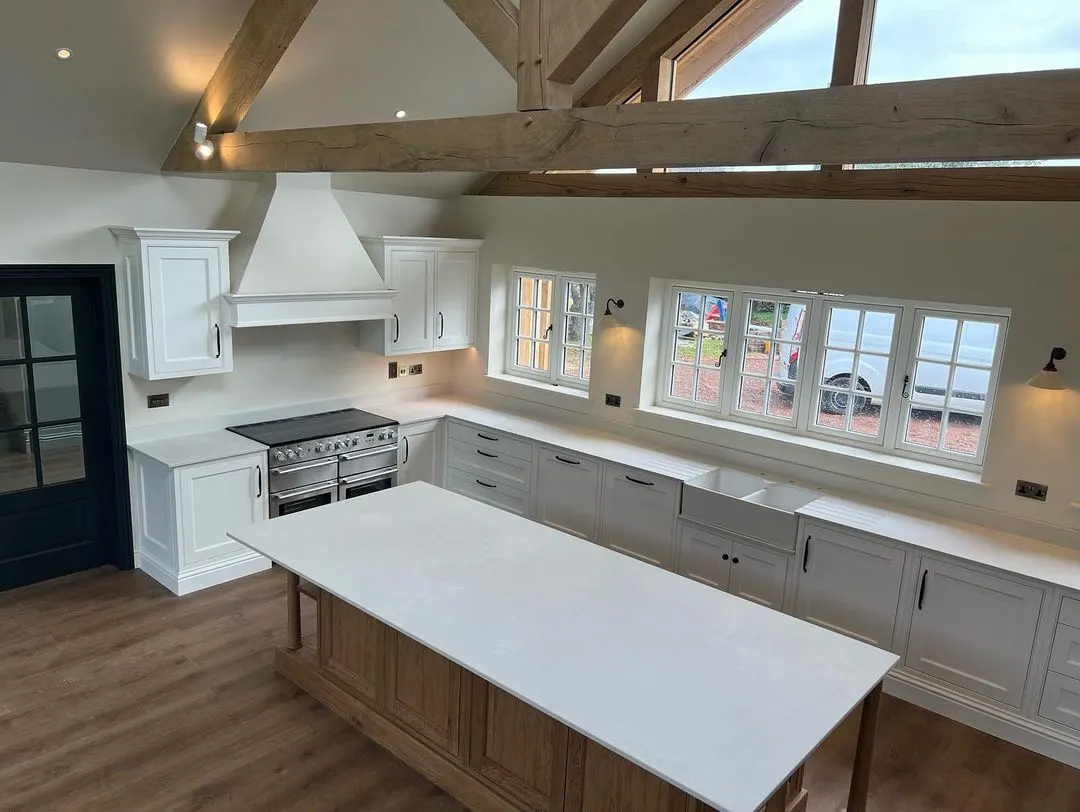
Quartz countertops are engineered worktops made by combining natural quartz crystals with resins and pigments. The result is a dense, practical surface with consistent design options, low routine maintenance, and a finish suited to kitchens, utility areas, and other hard working spaces.
Quartz countertops are often described as stone worktops, but they are not quarried as a finished countertop in the same way as granite. Natural quartz minerals provide hardness and visual depth, while the engineered composition allows manufacturers to create controlled colours, veining, and surface finishes. That distinction matters when you compare quartz kitchen countertops with granite, because the two materials can look similar while behaving differently in use.
For a homeowner planning a refurbishment, the useful question is not whether quartz is completely natural. It is whether the surface suits the way the kitchen will be used. Quartz can create a calm, uniform background for modern cabinetry, or it can imitate the movement of marble and other stone styles without making every section of the room visually unpredictable.
The phrase countertops quartz countertops may appear in searches because people are comparing material, product, and installation terms at the same time. In practice, the decision concerns the complete worktop: slab selection, thickness, edge profile, sink cut outs, hob cut outs, joins, upstands, splashbacks, templating, and fitting. A good material can still disappoint if these details are not resolved before fabrication.
| Criterion | Quartz countertops | Granite worktops |
|---|---|---|
| Material | Engineered quartz crystals, resin, and pigments | Natural stone with geological variation |
| Routine care | Nonporous, food safe, and no routine sealing or polishing | Care depends on the selected slab and finish |
| Heat | Use trivets because resin can be affected by direct heat | Generally offers greater heat confidence, while protection remains sensible |
| Appearance | Controlled colours and repeatable design direction | Naturally unique movement and mineral variation |
| Best suited to | Coordinated contemporary designs and straightforward maintenance | Kitchens where natural variation and stone character are priorities |

Manufacturers make quartz countertops by combining natural quartz crystals with resin binders and pigments, then forming and finishing the mixture into slabs. Fabricators later cut each slab to the kitchen template, create openings and edges, and install the finished pieces.
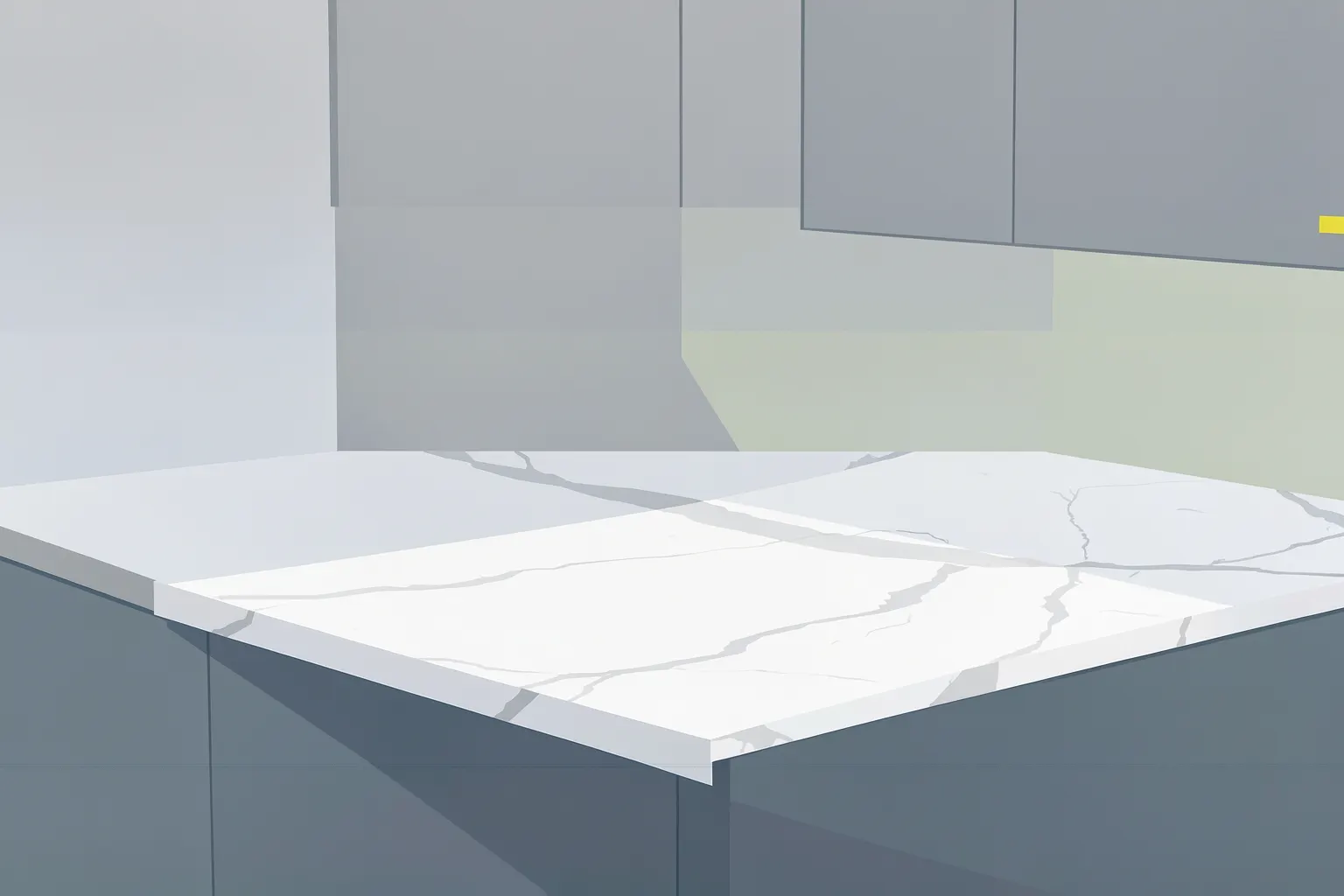
The manufacturing process begins with carefully selected quartz particles. These crystals contribute the mineral character and much of the surface hardness. Resin binds the mixture, while pigments control the base colour and help create decorative movement. Depending on the design, the finished slab may have a quiet solid appearance, fine speckling, or veining that runs through the pattern.
After the ingredients are combined, the mixture is compacted and cured into a slab. Factory finishing then creates the selected surface texture and polishes the visible face. The appearance you see in a showroom sample should therefore be considered alongside a full slab view where possible. Veining direction, joins, and the position of cut outs can change how the final kitchen reads.
Fabrication is the stage where a standard slab becomes a bespoke worktop. A template records the position of walls, cabinets, sinks, hobs, tap holes, overhangs, and joints. Accurate information is particularly important around corners and appliances. Once quartz has been cut, adjustments are not as simple as changing a cabinet door, so design decisions should be settled before the slab enters production.
MT Stones approaches this work through in house stone fabrication in London, using precision machinery to cut, shape, and finish quartz, granite, and marble to the requirements of each project. For a homeowner, the practical benefit of understanding this process is clearer communication: ask who templates the kitchen, where fabrication takes place, how the pattern will be positioned, and what the fitting stage includes.
Quartz countertops offer a nonporous, food safe surface that is highly resistant to everyday stains and scratches. They also provide broad design flexibility and generally avoid the sealing routine associated with some natural stone surfaces.
The first major benefit is everyday practicality. A nonporous surface has very little opportunity for liquid to enter the material, which makes cleaning more straightforward and helps limit the absorption concerns that can arise with more porous surfaces. Quartz is described as food safe and nonporous, so it suits preparation areas when normal kitchen hygiene is followed.
Quartz is also highly resistant to stains and scratches in ordinary domestic use. That does not make it indestructible. Grit, abrasive tools, harsh chemicals, and careless handling can still affect a polished finish. The sensible approach is to wipe spills promptly, use suitable cleaning products, and treat the worktop as a premium surface rather than a cutting board.
Routine care is another reason people choose quartz. The surface does not need sealing, polishing, or reconditioning as part of normal maintenance. This can simplify ownership, especially for households that want the visual quality of stone without adding another recurring task to the kitchen calendar. Cleaning remains necessary, but maintenance is usually a matter of consistent everyday habits rather than specialist treatment.
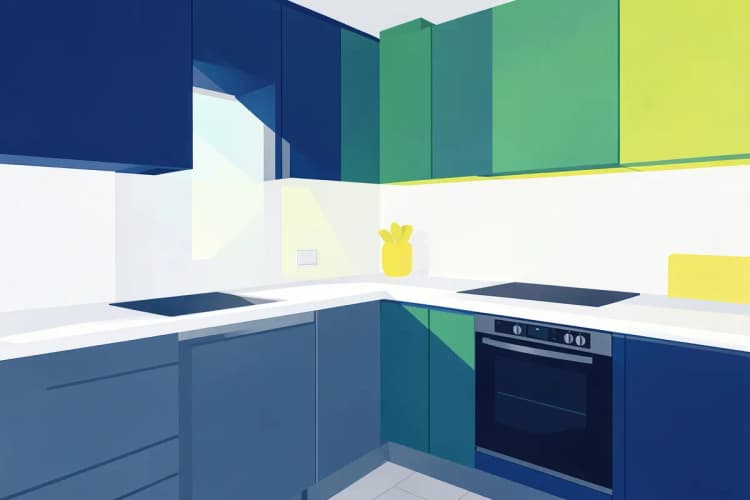
Design control is equally important. Quartz worktops can be selected in light colours, deep tones, subtle textures, and expressive veined patterns. The consistency of an engineered design can help when a project includes an island, long runs, or multiple connected surfaces. It also makes it easier to coordinate the worktop with cabinetry, wall finishes, flooring, and appliances.
For families who cook frequently, the material offers a useful balance between appearance and resilience. It can support busy preparation, breakfast routines, entertaining, and general household use while retaining a polished architectural look. The final result still depends on correct fabrication, a stable base, well planned joins, and sensible care after installation.

The main disadvantages are sensitivity to direct heat, the need for professional fabrication, and the fact that quartz does not provide the completely unique pattern of a natural granite slab. It is also an engineered material, so buyers should check the exact design, finish, and care guidance before ordering.
Heat is the most important practical limitation. Quartz can withstand moderate heat, but hot cookware protection is still advised. A pan removed from the hob or oven should go onto a trivet or hot pad rather than directly onto the worktop. The resin binder can be affected by sustained high temperatures, and direct heat may leave a permanent mark or cause discolouration.
Quartz can also be demanding during fabrication. Heavy slabs need suitable handling, precise supports, and careful cut outs around sinks and hobs. A poorly planned joint may be more noticeable in a strongly veined pattern, while a narrow section or unsupported overhang can create unnecessary structural risk. These are not reasons to reject quartz, but they are reasons to treat templating and fitting as part of the product rather than an afterthought.
Some buyers prefer the natural variation of granite and may find engineered consistency less appealing. Quartz patterns can be highly convincing, but the design is controlled rather than created by geological chance. If your priority is a one of a kind natural surface, granite may have the stronger emotional appeal. If your priority is coordinated colour and predictable pattern placement, quartz may be easier to specify.
Finally, colour samples are useful but limited. Lighting, cabinet colour, wall finishes, and the scale of the room can change how a slab appears. Requesting samples and discussing the full slab layout can prevent a pale surface from feeling too cool or a dramatic pattern from overwhelming a compact kitchen.
Explore our custom quartz and granite countertops for a stunning upgrade.
Get a Free Quote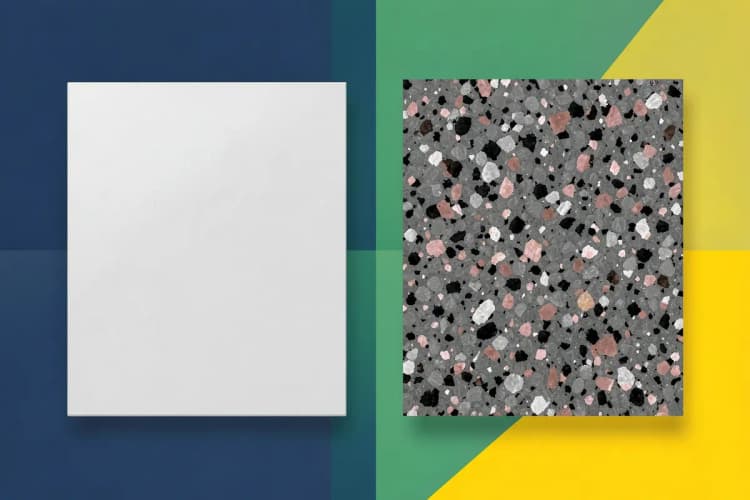
Quartz and granite are both capable of serving as long term kitchen worktops when they are correctly specified, supported, fabricated, and cared for. Quartz offers strong resistance to everyday stains and scratches, while granite is a natural stone with mineral variation and a robust feel. Neither should be treated as immune to damage.
The difference is most noticeable in the way each material responds to heat, pattern, and repair. Quartz needs protection from hot cookware because of its resin content. Granite generally gives cooks more confidence around heat, although trivets remain a sensible habit. Quartz provides a more controlled visual result, while granite varies from slab to slab.
Quartz is attractive to homeowners who want a straightforward cleaning routine. Its nonporous surface is food safe, and normal care does not require sealing, polishing, or reconditioning. A soft cloth, an appropriate surface cleaner, and prompt attention to spills are usually more relevant than periodic specialist treatments.
Granite care depends on the specific stone and finish. Some granite worktops are naturally more resistant to absorption than others, but the correct care plan should be confirmed for the selected slab. Ask what cleaning products are suitable, whether sealing is recommended, and how the fabricator expects the surface to be maintained. A quotation that explains aftercare is more useful than one that only names the material.
Quartz is often the easier choice when you want a controlled design across connected runs. The colour family, veining style, and finish can be selected to work with the rest of the room, and engineered patterns can create a coherent look around an island and perimeter surfaces. This is particularly useful for contemporary kitchens where visual continuity matters.
Granite brings natural variation that can become the focal point of a kitchen. Each slab has its own movement, mineral distribution, and tonal balance. That individuality can be beautiful, but it makes slab viewing and layout planning more important. Compare the actual piece, not only a small sample, when the pattern is central to the design.
The cost of quartz countertops or granite worktops is not determined by material alone. A realistic comparison should consider the slab, thickness, finish, edge detail, sink and hob cut outs, tap holes, joins, upstands, splashbacks, templating, delivery arrangements, and installation. A lower headline figure may exclude work that another quotation includes.
Quartz may offer value through predictable maintenance and design consistency, while granite may justify its price for buyers who prioritise natural variation and heat confidence. The fairest comparison is a like for like written quotation using the same layout and the same fabrication details. Ask whether the quote is based on a measured template or an early estimate, then confirm how changes are handled before production.
For more help weighing the two materials in a UK kitchen, the article on Quartz vs. Granite Worktops: Which Is Right for Your Kitchen? can sit alongside this guide. The right answer is less about declaring one universal winner and more about matching the surface to your cooking habits, visual priorities, and installation plan.

There is no single UK price for quartz countertops because the final quotation depends on the kitchen shape, slab choice, fabrication, edge details, cut outs, joins, and fitting. The most useful way to find the cost is to submit accurate measurements and request a written, like for like quotation.
When homeowners search how much quartz countertops cost, they often expect a simple rate per metre. That figure can be a useful starting point, but it cannot describe the complete project. A small, uncomplicated run and a large island with detailed edging may use similar material while requiring very different fabrication and installation work.
Begin with the layout. Record the approximate lengths, the position of corners, the depth of the cabinets, and the location of sinks, hobs, taps, windows, and appliances. Include any island, breakfast bar, upstand, splashback, or full height panel. These details help a fabricator understand both material use and the complexity of the work.
Next, compare the specification rather than only the total. Ask whether the quotation includes the selected slab, template, fabrication, edge profile, cut outs, joins, fitting, and any agreed accessories. Check whether the price is based on measurements supplied by the homeowner or on a site template. A professional template after the cabinets are ready can resolve details that an early estimate cannot.
Colour and pattern can affect the quotation because premium designs, slab availability, and layout efficiency differ. A strongly veined design may require extra planning to align the visual flow across a join or island. That work is part of the design quality, not merely an administrative detail.
The UK market is substantial. MarketIntelo reported that the quartz countertops segment generated $4.98 billion in revenue in 2025 and represented 41.5% of the countertops market. That context explains why homeowners encounter a broad range of styles and specifications, but it does not replace a project specific quotation in pounds sterling.
For a London or surrounding area refurbishment, send measurements, photographs, and a simple plan to a specialist. Then ask for samples, clarify the template stage, and make sure the final document identifies the material and the work included. This approach gives you a meaningful figure before committing to fabrication.
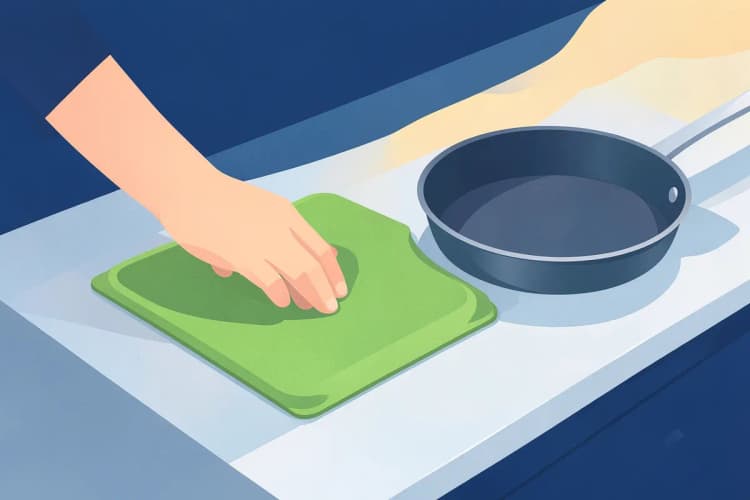
Use a trivet or hot pad under hot pans, roasting trays, and cookware. Quartz can tolerate moderate heat, but direct or sustained heat may affect the resin binder and leave a permanent mark.
This is one of the easiest quartz care habits to adopt. Move hot cookware from the hob or oven onto a heat resistant surface before placing it on the worktop. Do not assume that a brief touch is harmless simply because the stone feels cool at the start of the day.
The reason is the engineered composition. Quartz crystals are held together by resin, and that binder is more vulnerable to intense heat than the mineral particles themselves. Slabwise describes resin binders as potentially softening or discolouring under sustained temperatures between 150°C and 300°C, with hot pans capable of causing permanent marks.
Heat protection also helps avoid thermal shock around cut outs and joins. The worktop should be supported correctly, especially near a sink or hob, and appliances should be installed with the clearances required by their instructions. If you are planning an induction hob, range cooker, or undermounted sink, discuss the interface with the fabricator before templating.
A trivet is a small practical safeguard compared with the disruption of replacing or repairing a marked surface. Include heat protection in the kitchen design from the start, so it is convenient to use rather than hidden in a cupboard.

The best quartz worktop brand is not universal because the right choice depends on design, technical documentation, fabrication quality, warranty terms, and the support available through the installer. A strong brand should be judged as part of the complete supply and fitting service, not by a sample alone.
Start with the slab itself. Look at the colour in the light of your kitchen, inspect the scale of the pattern, and ask how the design is intended to run across joins and edges. A beautiful sample may not show how a full island will look. The fabricator should be able to explain slab availability, layout, and any limitations around cut outs.
Then assess technical confidence. Ask for clear guidance on heat, cleaning, support, overhangs, sinks, and appliance interfaces. A reputable manufacturer should publish care information and product specifications that are easy to understand. The installer should also be comfortable explaining what is and is not covered by the product documentation.
Warranty support is another selection criterion, but read the actual terms. Check who administers the warranty, what registration or proof of purchase is required, and whether the cover applies to the material only or also to fabrication and installation. Avoid choosing solely from a headline promise that you have not examined.
One 2026 manufacturer guide places a leading US made brand at the top for domestic production, lifetime warranty support, and tight quality control. That is useful context, but it is not a universal verdict for a UK refurbishment. Availability, delivery coordination, local fabrication, installation workmanship, and responsive communication can matter just as much as a brand reputation created in another market.
The National Kitchen and Bath Association 2026 Kitchen Design Trends report, as reported by Southern Living, found that 78% of surveyed experts expected quartz to remain popular for countertops over the next three years. Popularity can indicate strong demand and design relevance, but it should not replace checking the actual slab and the people responsible for fitting it.
In practical terms, choose the brand and fabricator combination that gives you confidence in the selected design, written care advice, transparent specification, accurate templating, and accountable installation. MT Stones sees quartz as a design decision and a fabrication decision at the same time, which is why samples, measurements, and the fitting plan should be discussed together.

MT Stones can help when a refurbishment needs a made to measure quartz or granite worktop and a coordinated route from material selection to fitting. The company operates in London and surrounding areas, with an in house London factory and more than two decades of experience in quartz and natural stone.
By this stage, the important decision is usually no longer simply quartz or granite. It is how to turn a chosen surface into a finished worktop that fits the actual kitchen, works around the sink and hob, and reflects the intended design. That is where a specialist fabrication process becomes useful.
MT Stones offers made to measure quartz and granite worktops with rapid installation in up to seven days. The products are made from high quality materials, with competitive pricing and a broad range of available options. For a homeowner comparing quotations, this creates a practical starting point: share the kitchen measurements, describe the desired colour and pattern, and discuss the details that will affect the finished specification.
The process begins with consultation and design. Measurements can be supplied for a free, no obligation quotation, or a home visit can be arranged for accurate measurements. Samples of different quartz options can help narrow the selection before the kitchen is ready for templating. This is especially useful when the final choice depends on cabinet colour, natural light, or the scale of veining.
Templating takes place after the cabinets are fitted, with sinks and hobs available and range cookers in position where relevant. That sequence allows the worktop to be designed around the real kitchen rather than an assumption made at an earlier stage. Fabrication is completed in the London factory, where the team cuts, shapes, and finishes the selected material before the fitters install the worktop at the property.
For someone renovating in London or nearby, the value of this approach is clarity. The material choice, slab layout, edge treatment, cut outs, and installation timing can be considered as one project rather than as disconnected purchases. A free quotation then gives the homeowner something concrete to review before moving forward.
A practical choice for homeowners who want controlled design, low routine maintenance, and strong resistance to everyday stains and scratches.
A natural stone option for buyers who value geological variation, a distinctive slab, and greater confidence around direct heat.
A service profile for homeowners who want material choice, templating, fabrication, and fitting coordinated by an experienced team.
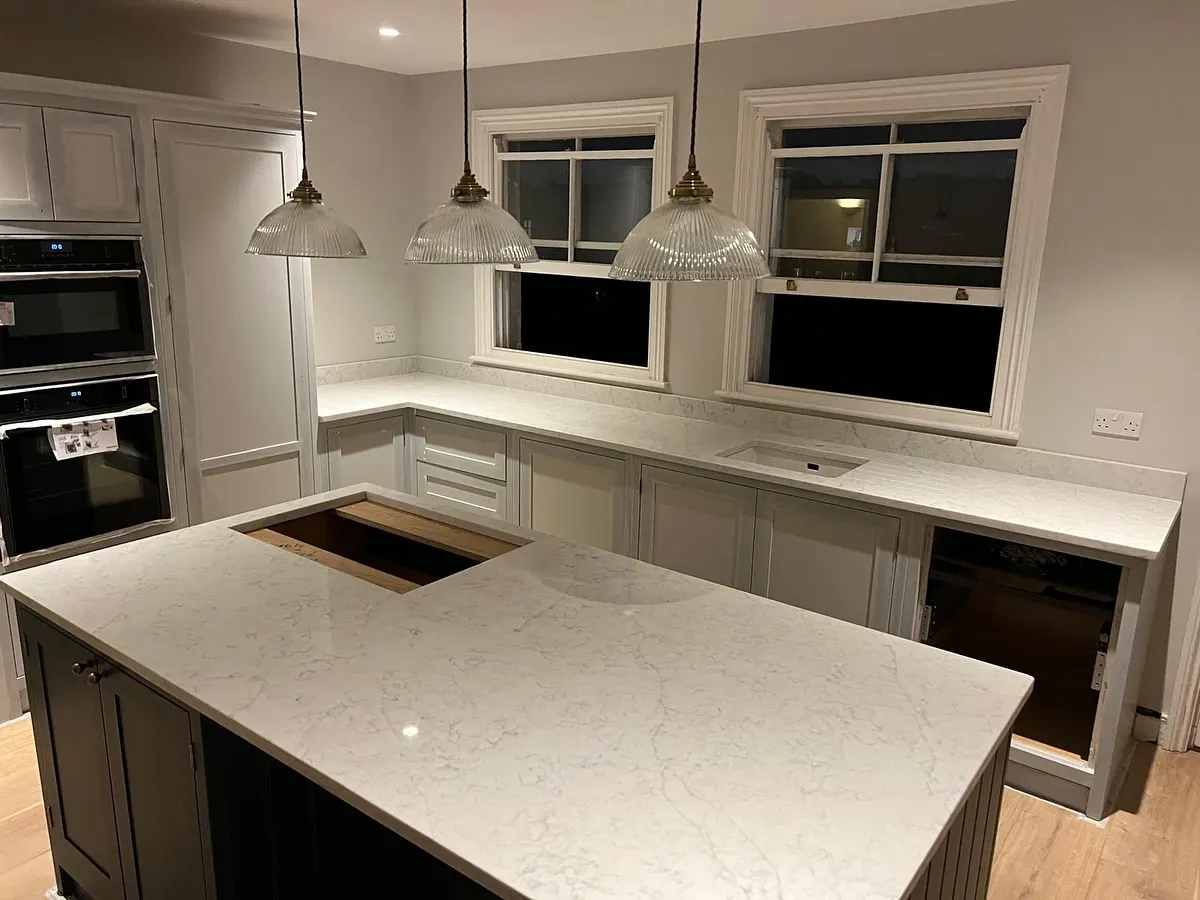
Explore our custom quartz and granite countertops for a stunning upgrade.
Get a Free Quote