
Quartz vs. Granite Worktops: Which Is Right for Your Kitchen?
Compare worktops quartz and granite for a UK kitchen. Learn about cost, style, cleaning, durability, heat, and how to choose with confidence.
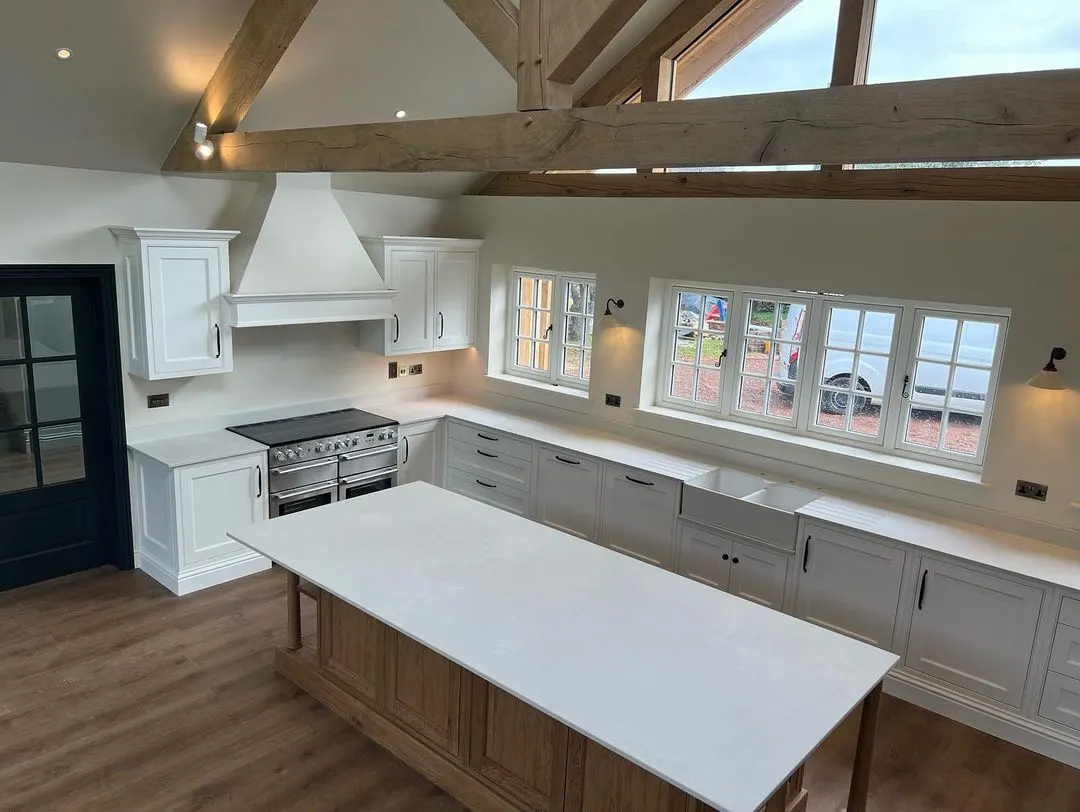
Ouvir o artigo
Choosing worktops quartz or granite affects daily cleaning, kitchen character, and the way your renovation budget is used. This guide explains the practical differences before you request measurements.
Quick answer
Quartz worktops are engineered surfaces that offer consistent styling, strong stain resistance, and simple care because they are non porous. Granite is natural stone, so every slab has its own movement and character, but it is porous and generally needs periodic sealing. For a busy kitchen where predictable appearance and low routine maintenance matter most, quartz is often the easier fit. Choose granite when natural variation, tactile stone character, and a more individual visual result are central to the design. In either case, accurate templating, suitable installation, and sensible heat protection matter as much as the surface itself.
Summary
Quartz offers consistent colour, low routine maintenance, and strong resistance to staining.
Granite gives a natural, slab specific appearance, but its porous surface needs more care.
Compare the full installed specification, including templating, edge details, cut outs, and fitting.
Use trivets and heat protection on quartz rather than placing very hot cookware directly on the surface.
A specialist fabricator can help match the slab, layout, finish, and installation method to the kitchen.
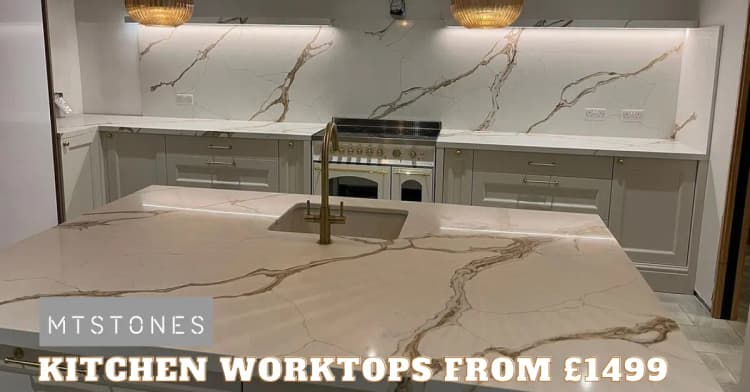
What Are Quartz Worktops?
The global quartz countertop market was valued at USD 14.8 billion in 2026, while quartz represented approximately 36% of countertop installations in the United States during 2026. Those figures describe market activity rather than a promise about any individual project, but they help explain why quartz appears so often in contemporary kitchen planning.
The appeal is not only visual. A kitchen worktop must cope with food preparation, spills, cleaning products, moisture, and repeated contact around sinks and hobs. Quartz is non porous, so liquids do not readily enter the surface. The supplied material facts state that quartz generally does not require sealing, which removes a maintenance task that is associated with porous stone.
This does not make quartz indestructible. It remains important to use an appropriate chopping surface, wipe spills promptly, and follow the fabricator’s care guidance. The edges and cut outs also deserve attention because the quality of the finished kitchen depends on fabrication and installation as well as the slab. A well selected quartz surface can therefore combine a calm, coordinated look with a routine that is straightforward for a busy household.
The market reflects sustained interest in the material. According to the market data supplied for this article, the global quartz countertop market was valued at USD 14.8 billion in 2026, while quartz represented approximately 36% of countertop installations in the United States during 2026. Those figures describe market activity rather than a promise about any individual project, but they help explain why quartz appears so often in contemporary kitchen planning.
Criterion | Quartz | Granite |
|---|---|---|
Composition | Engineered stone with a manufactured pattern | Quarried natural stone with natural variation |
Porosity | Non porous | Porous |
Sealing | Generally does not require sealing | Typically needs periodic sealing |
Pattern | More consistent from slab to slab | Unique variation from slab to slab |
Stain resistance | Generally more resistant to staining | Can stain if not properly sealed |
Care approach | Gentle cleaning and heat protection | Gentle cleaning, sealing, and heat protection |
A practical comparison of quartz and granite worktops
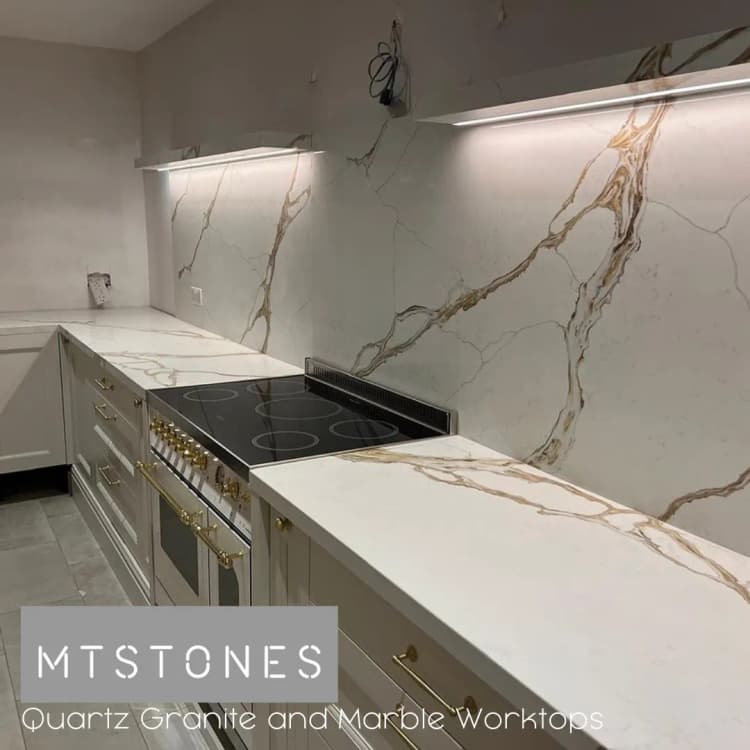
What Are Granite Worktops?
Granite worktops are cut from quarried natural stone slabs. Each slab has its own mineral movement, colour variation, and visual character, making granite a strong choice for homeowners who want the worktop to feel distinctly natural.
Granite begins as a natural stone rather than a manufactured pattern. Its appearance comes from geological formation, so the relationship between background colour, mineral flecks, and larger areas of movement can differ across slabs. This is a central part of its appeal. Instead of selecting a completely controlled repeat, you are choosing a piece of stone with an individual visual identity.
That individuality makes viewing the actual slab particularly useful during a renovation. A small sample can communicate the general colour, but it cannot always show how a prominent vein or concentration of mineral detail will fall around a sink, hob, island, or joint. The layout should be considered alongside the room, because fabrication decisions influence which parts of the slab become most visible.
Granite is also a practical kitchen material when it is specified and cared for properly. It tolerates normal food preparation well, but the stone is porous. The supplied material facts explain that granite typically needs periodic sealing, and a seal helps reduce the risk of liquids entering the surface. Sealing is not a substitute for cleaning, nor does it remove the need to deal sensibly with spills.
For a homeowner, granite is therefore a choice between visual individuality and a more involved care routine. That is not a weakness if the household values natural variation and is prepared to follow maintenance guidance. It simply means the material should be selected with its ongoing requirements understood from the outset.
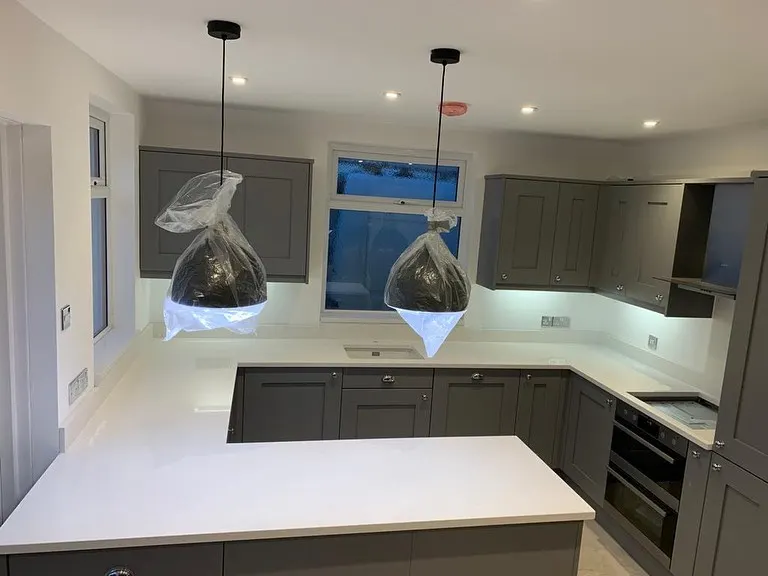
What Are the Key Differences Between Quartz and Granite?
The main difference is that quartz is engineered and non porous, while granite is natural and porous. Quartz usually provides more predictable patterning and easier stain management; granite provides more natural variation and generally requires periodic sealing.
Durability and Maintenance
Both surfaces are intended for demanding kitchen use, but durability is not only a question of hardness. It also includes how easily the surface deals with moisture, staining, everyday cleaning, edge impact, and the habits of the household. Quartz has a non porous surface, while granite is porous and typically needs periodic sealing. That distinction affects the amount of routine attention required after installation.
The supplied material facts also state that quartz is more stain resistant than granite because its non porous surface blocks liquids and bacteria. This can be valuable around food preparation areas, particularly where sauces, oils, tea, or other strongly coloured substances may be left on the surface for a while. Granite can still perform very well, but a neglected or worn seal can leave it more vulnerable to staining.
Neither material should be treated carelessly. Heavy objects should not be dropped on exposed edges, abrasive products can dull finishes, and standing moisture should not be ignored around joints or cut outs. The installation plan matters too. A properly supported overhang, accurately formed sink opening, and well finished edge reduce stresses that are unrelated to the general properties of the slab.
Think of maintenance as a design decision. Quartz suits a household that wants the simplest regular routine. Granite suits a homeowner who appreciates natural stone enough to accept sealing and more deliberate care. The better choice is the surface whose requirements match how the kitchen will actually be used.
Aesthetic Appeal
Quartz is manufactured for consistency, so it can provide a more controlled visual field across adjoining sections. This helps when the design calls for quiet continuity, carefully repeated veining, or a close relationship between the island and perimeter worktops. It is also useful when homeowners want to coordinate several surfaces without relying on an unpredictable shift in mineral pattern.
Granite remains a natural stone with unique slab to slab pattern variation. The supplied material facts make this contrast clear: granite is quarried natural stone, while quartz is manufactured for a consistent pattern. Granite may therefore bring depth and movement that feels more organic, with details that change as the eye travels across the room.
The right aesthetic depends on the wider kitchen rather than on the worktop alone. Flat cabinet fronts, painted cabinetry, metal finishes, wall colour, lighting, and splashback choices all affect how a surface reads. A heavily patterned granite may become the visual focus, while a restrained quartz can support stronger cabinetry or a more layered room. Conversely, expressive quartz veining can be used as a deliberate focal point where a quieter cabinet scheme needs emphasis.
Samples should be viewed in the actual room whenever possible. Daylight, warm artificial lighting, and reflections from nearby finishes can change the perceived balance between a pale background and darker movement. Ask how joints, edge profiles, and cut outs will interact with the pattern, because those details can influence the final appearance as much as the colour name.
Cost Comparison
Comparing the cost of quartz and granite worktops requires more than comparing a headline material rate. The installed specification may include templating, fabrication, sink and hob cut outs, edge finishing, joints, delivery, and fitting. A design with a large island, unusual angles, or multiple openings can demand more fabrication than a simple run, regardless of whether the chosen surface is quartz or granite.
Quartz may offer value through predictable pattern planning and a low sealing requirement, while granite may justify its cost for homeowners who prioritise a one off natural pattern. Neither material should be judged only by the lowest initial figure. Consider how much visual variation you want, how much maintenance you are willing to undertake, and whether the layout makes efficient use of the slab.
Ask for a written quotation that describes the material, finish, thickness, edge treatment, cut outs, joint locations, templating process, and installation scope. This makes comparisons more meaningful and reduces the risk of selecting a quotation that omits an important part of the finished worktop. A clear specification is especially useful when comparing quartz worktops near me, because local availability and fitting arrangements can differ.
Market scale can provide context, although it cannot set the price of a particular kitchen. The supplied market data records a global quartz countertop market value of USD 9.1 billion in 2024 and forecasts USD 11.7 billion for 2030. These figures indicate broad market development, not a direct guide to a UK quotation.
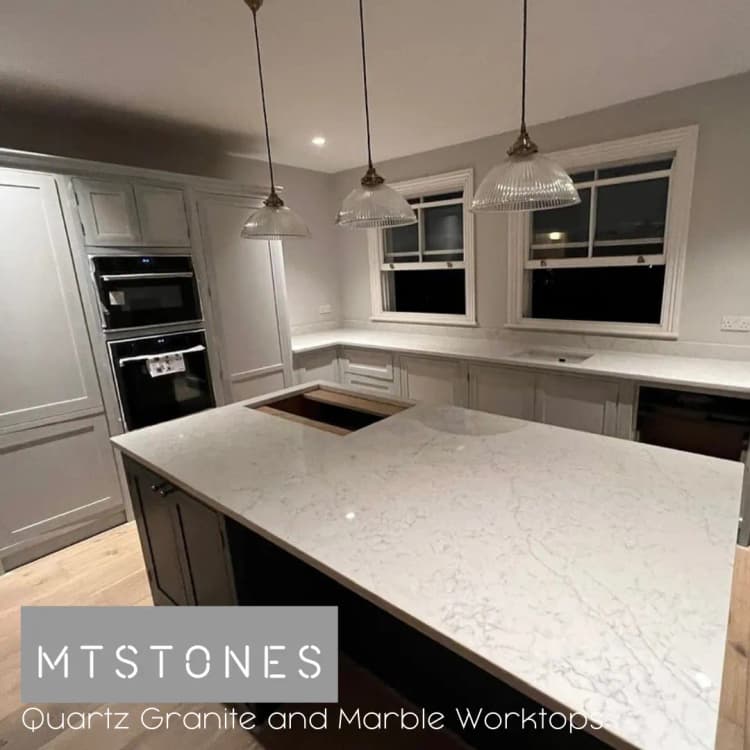
How to Choose the Right Worktop for Your Kitchen?
Choose the right worktop by matching the surface to your budget, preferred visual result, maintenance habits, and kitchen layout. A useful decision begins with the complete installed specification rather than a material name alone.
Consider Your Budget
Start by defining what the worktop must include. A useful budget conversation covers the slab, survey or template, fabrication, cut outs, edge details, joints, delivery, and installation. If a quotation describes only the material, it may not represent the final cost of the finished kitchen. Clear inclusions allow you to compare like with like.
Next, separate essentials from visual upgrades. A straightforward edge and uncomplicated layout may keep fabrication more controlled, while a detailed edge, extensive veining alignment, or complex island shape can require more planning. This is not a reason to avoid distinctive design. It is a reason to understand where the budget is being used before committing to a colour or pattern.
Quartz can be appealing when the homeowner wants a consistent appearance and a simple care routine. Granite can be appealing when the natural slab is the main design feature. Consider the long term value of living with the result, not just the initial material choice. A surface that looks right in the room and suits your routines may be more satisfying than a superficially cheaper option that creates compromises elsewhere.
Request samples and a detailed written scope before making a decision. If the project is in London or the surrounding areas, a local fabricator may also be able to discuss the practical relationship between survey, fabrication, and installation in the context of the property.
Evaluate Your Kitchen Style
Look at the kitchen as a composition. Cabinet colour, door profile, handles, flooring, wall finishes, appliances, and lighting should all be considered with the worktop. Quartz is often useful for a coordinated scheme because its pattern can be selected for consistency. Granite works well when the room benefits from natural movement and a more individual focal point.
A small kitchen may benefit from a lighter surface that helps reflect available light, while a large island may provide enough area for a more expressive pattern to be appreciated. These are design tendencies, not fixed rules. A dark or highly marked surface can be effective in a compact room when the rest of the palette is controlled, and a restrained surface can make a large room feel calmer.
Pay close attention to the slab layout. Veining direction, joint position, sink placement, and the relationship between the main run and island can change the result. Ask to see how the proposed template uses the slab, particularly if the pattern is prominent. The best visual decision is often made when the material and the fabrication plan are reviewed together.
MT Stones approaches the subject as a fabrication and installation decision rather than a colour choice in isolation. Its work includes quartz, granite, marble, and porcelain worktops, with a broad selection of colours and patterns for homeowners planning a kitchen renovation in London and adjacent areas.
Transform Your Kitchen Today
Explore our custom quartz and granite countertops for a stunning upgrade.
Get a Free Quote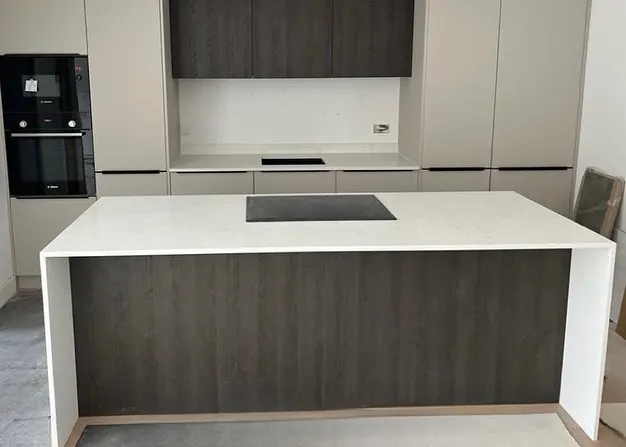
How Do You Clean and Maintain Quartz and Granite Worktops?
Clean quartz with a soft cloth or sponge, mild detergent, and clean water, then dry the surface. Clean granite in the same gentle manner, while also following the sealing and care guidance supplied for the specific stone.
Cleaning Quartz Worktops
Quartz is generally straightforward to maintain because its non porous surface does not readily absorb everyday spills. For routine cleaning, remove crumbs and wipe the area with a soft cloth or sponge, mild detergent, and clean water. Drying afterwards helps reduce streaks, especially on darker or highly polished finishes.
Deal with spills as part of normal kitchen use rather than allowing residue to build up. Food, oils, tea, and strongly coloured liquids are easier to remove when they are fresh. Avoid treating the worktop as a place for harsh experimentation with strong chemicals, abrasive powders, scouring pads, or unapproved solvents. These products can affect the finish even when the underlying slab remains sound.
Use a separate chopping surface and take care around sharp or heavy items. The surface may resist ordinary wear, but cutting directly on the worktop can mark the appearance and blunt knives. Pay attention to the areas around sinks and appliances, where moisture and residue can collect at joints or edges.
The non porous nature of quartz supports a hygienic, manageable routine, but it does not replace sensible housekeeping. Follow the fabricator’s product specific instructions, particularly if the finish is textured, honed, or otherwise different from a standard polished surface.
Cleaning Granite Worktops
Granite also benefits from gentle daily cleaning with a soft cloth or sponge, mild detergent, and clean water. Wipe spills promptly and dry the surface, especially around sink areas. Avoid abrasive cleaning materials and products that may leave a film or react with the finish.
The additional consideration is sealing. Granite is porous and typically needs periodic sealing, so the care schedule should be discussed when the worktop is specified. Sealing can reduce absorption, but it does not mean that spills can be ignored or that every cleaning chemical is suitable. The right interval and product depend on the stone, its finish, and the advice supplied with the installation.
A simple maintenance record can be useful in a busy household. Note the care instructions, the type of finish, and the recommended approach to resealing, then make sure everyone using the kitchen understands the basics. This is particularly helpful when a property is occupied by several people with different cleaning habits.
Quartz and granite can both remain attractive for a long time when their surfaces are treated according to their composition. The key difference is that quartz usually removes the sealing task, while granite asks the homeowner to include it in the ongoing care plan.
How to Compare Quartz and Granite Suppliers
What to Check in a Quartz Specification
When comparing quartz brands, focus first on the attributes that affect the finished kitchen rather than choosing by recognition alone. Review the consistency of colour and pattern, the available finishes, slab dimensions, technical guidance, warranty wording supplied with the product, and the fabricator’s experience with the chosen material. A reliable specification should make clear which collection and finish are being quoted.
For a homeowner, sample quality matters. Look at larger samples or full slabs where the design has pronounced movement, because a small sample may not show how the pattern will travel across an island or around a cut out. Ask how joints will be positioned and whether the proposed layout can maintain the intended visual flow.
The best quartz option is the one that suits the room and can be fabricated accurately within the project’s requirements. Consistent patterning can help with coordination, but it should not be treated as a substitute for careful templating or skilled installation. Those practical stages determine how the selected material performs visually in the completed kitchen.
Assessing the Supply and Installation Process
A second useful way to assess quartz is by looking at the supply and installation route. A fabricator with access to a broad range of colours and patterns can help you compare calm, lightly veined, and more expressive designs without forcing the decision into a narrow palette. Ask to see how the supplier handles edge finishing, sink cut outs, joints, and the relationship between the slab and the kitchen plan.
The same principle applies when considering granite. Review the actual slab, understand its sealing requirements, and discuss how natural variation will be placed within the room. Brand selection is only part of the decision because the finished result depends on material quality, measurement, fabrication, transport, and installation working together.
Rather than treating a list of brands as a ranking, compare the evidence available for your own project. Look for clear technical information, transparent scope, suitable samples, and a team able to explain what will happen from template through fitting. That approach is more useful than selecting a label without understanding the process behind it.
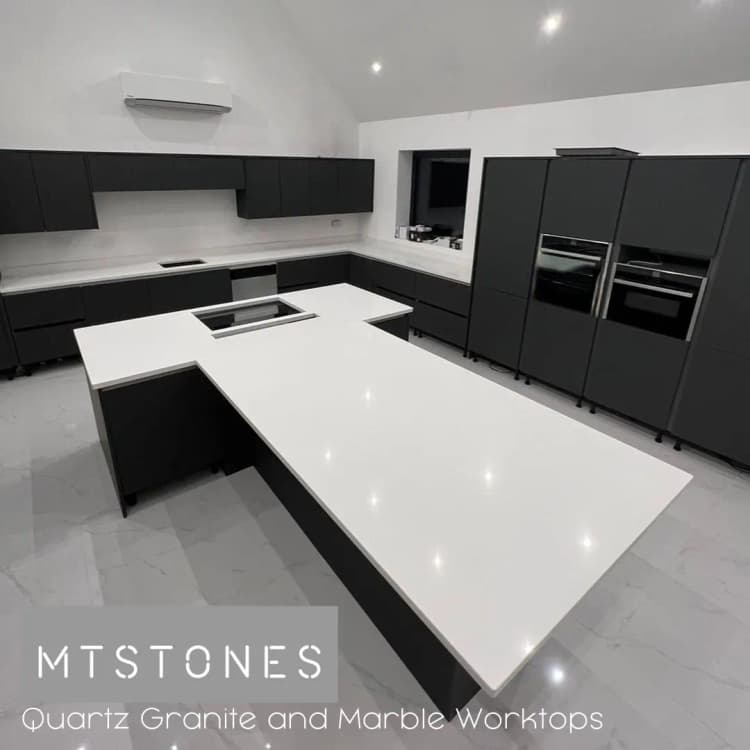
Can I Put Hot Items on Quartz Worktops?
You should not place very hot cookware directly on quartz worktops. Use a trivet or heat resistant mat because sudden, concentrated heat can damage the surface, affect the finish, or create thermal stress around vulnerable areas.
Quartz can cope with ordinary kitchen activity, but a pan, tray, or dish taken directly from a high heat source is a different situation. Heat is concentrated in a small contact area, and the risk is greater near edges, joints, sink openings, or other fabricated sections. The safest habit is to place hot items on a suitable trivet before they reach the worktop.
This precaution is simple and does not need to disrupt the design. A dedicated heat resistant mat can sit near the hob, while a larger trivet can be kept beside the preparation area. The same habit protects the finish from marks and reduces the chance of an avoidable repair or replacement.
Do not assume that a short contact time makes direct placement safe. The temperature of the cookware, the size of the base, the condition of the surface, and the location on the slab all affect the risk. Follow the care instructions provided with the selected quartz product, because technical recommendations can differ between finishes and formulations.
Granite is also best treated with sensible heat protection, even though it is natural stone. Protecting both materials is a practical part of maintaining a clean, consistent kitchen and avoids turning a routine cooking moment into a surface problem.
TL;DR: Which Worktop Should You Choose?
Quartz is usually the stronger all round choice for homeowners who prioritise simple cleaning, stain resistance, and a consistent appearance. Its non porous surface generally removes the need for sealing and makes everyday care more predictable. It suits coordinated schemes where the worktop needs to support the cabinetry rather than compete with it.
Granite is the better fit when the defining priority is natural stone character. Its slab to slab variation can make the worktop feel individual and visually rich, especially when the actual slab is selected with the room and layout in mind. The trade off is a more active maintenance routine because granite is porous and typically needs periodic sealing.
Before deciding, compare the complete installed specification, inspect realistic samples or slabs, and discuss the treatment of joints, edges, cut outs, and heat protection. The most suitable material is not simply the one with the most attractive sample. It is the one whose appearance, care requirements, fabrication plan, and budget fit the household.
For many busy kitchens, quartz provides the clearest path to low maintenance consistency. For homeowners who see natural variation as the central design feature and are comfortable with sealing, granite can be the more characterful choice.
How Bancadas de Quartzo e Granito can help
The final decision often becomes difficult at the point where online research meets the physical kitchen. You may understand the difference between quartz and granite, yet still need help judging pattern scale, slab placement, edge details, sink cut outs, and the practical sequence from measuring to installation. This is where a specialist fabricator can turn a general preference into a workable specification.
MT Stones offers Bancadas de Quartzo e Granito, made to measure for renovation projects in London and adjacent areas. The service covers quartz and granite worktops, with materials described as high quality and a selection of more than four hundred colours and patterns. That breadth can be useful when the brief is clear in principle but the final surface still needs to be matched to cabinets, lighting, and the wider room.
Installation is offered as part of the service, with a stated delivery commitment of up to seven days. The process is presented as personal and on site, allowing the project to be discussed around the actual kitchen rather than handled only through generic product information. For a homeowner deciding between a controlled quartz pattern and the variation of granite, that conversation can help connect the chosen material with the fabrication details.
The sensible next step is to take the kitchen plan, preferred style, and practical requirements into a quotation conversation. A free quotation from MT Stones can be used to review the available options and understand how the selected surface would be measured, fabricated, and installed. The point is not to choose quickly, but to make the material decision with enough detail that the finished worktop belongs naturally in the renovation.
1. Engineered quartz profile
Best suited to homeowners seeking consistent styling, low routine maintenance, and strong stain resistance.
2. Natural granite profile
Best suited to homeowners who want unique natural slab movement and accept periodic maintenance.
3. Specification led local fabricator profile
Best suited to homeowners who want the material, measurement, fabrication, and installation considered as one project.
FAQ
Are quartz worktops better than granite?
Neither is universally better. Quartz is usually easier to maintain, more stain resistant, and more consistent in appearance because it is non porous and engineered. Granite is natural stone with unique slab variation, but it is porous and typically needs periodic sealing. The better choice depends on whether low routine maintenance or natural individuality matters more to your household.
Do quartz worktops need sealing?
Quartz is non porous and generally does not require sealing. It should still be cleaned according to the product guidance, and the homeowner should protect it from direct heat, abrasive products, and avoidable impact.
Does granite stain more easily than quartz?
Granite can be more vulnerable to staining because it is porous, particularly if it is not properly sealed or if spills are left in place. Quartz generally resists staining better because its non porous surface blocks liquids and bacteria.
Can I put a hot pan on a quartz worktop?
It is better not to place a very hot pan or tray directly on quartz. Use a trivet or heat resistant mat, since concentrated heat can damage the finish or create thermal stress.
How do I compare quartz worktops near me?
Compare the complete installed specification, not only the material name. Check samples, slab availability, templating, cut outs, edge finishing, joint positions, fitting scope, and care guidance. A clear written quotation makes local options easier to assess.
Are quartz kitchen countertops easy to clean?
Yes. Routine cleaning normally involves a soft cloth or sponge, mild detergent, and clean water, followed by drying. Promptly remove spills and avoid abrasive or unapproved chemical products.
Why choose granite for a kitchen worktop?
Granite is a natural quarried stone with unique slab to slab pattern variation. It can give a kitchen a distinctive, natural focal point for homeowners who are comfortable including periodic sealing in the maintenance routine.
What should a quartz stone worktops quotation include?
It should describe the material and finish, templating, fabrication, cut outs, edges, joints, delivery, and installation. Asking for these details helps you compare the real scope of the completed worktop.