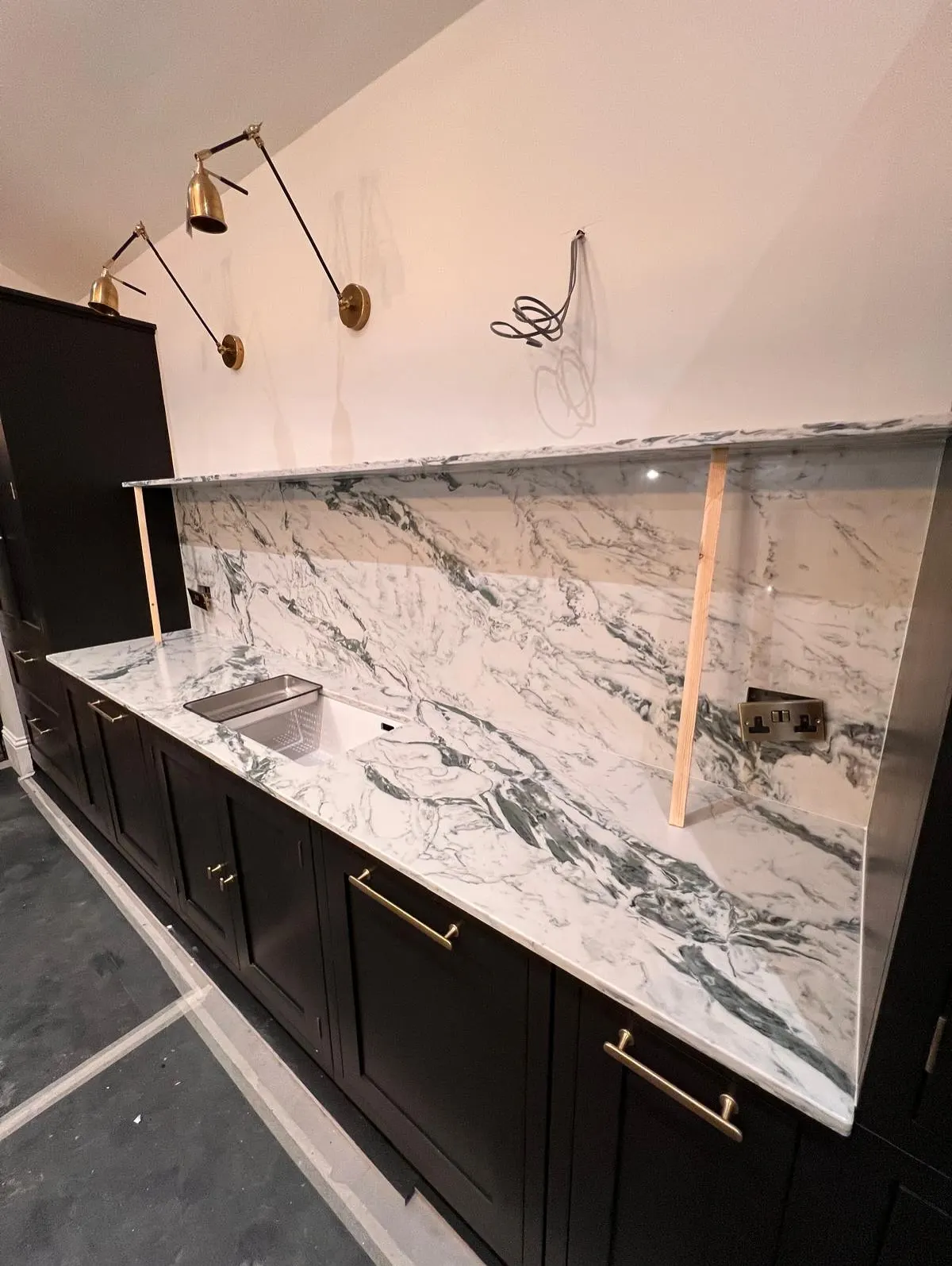
Quartz Countertops

Compare quartz worktops for kitchens by style, care, heat and fitting requirements, then make a confident choice for your renovation.

Ouvir o artigo
Quartz worktops can give a renovated kitchen a calm, tailored finish, but the right choice depends on more than colour. This guide covers performance, care, safety and local fitting decisions.
Quartz worktops for kitchens are engineered stone surfaces made from mineral content and a resin binder, offering consistent colour, practical everyday durability and a wide range of finishes. They suit homeowners who want a tailored, low-maintenance surface, but they still need sensible care: use a trivet for hot cookware, clean spills promptly and avoid abrasive products. Colour should be judged beside cabinet doors, flooring and natural light, while the fabricator should explain seams, cut-outs, templating and safe installation. For a local project, compare samples, workmanship and the clarity of the quotation rather than choosing from a photograph alone.

Quartz worktops are engineered stone surfaces formed from mineral particles combined with a resin binder and colour pigments. Unlike a slab selected for naturally occurring variation, engineered quartz is designed for a more controlled appearance, which makes it useful when a renovation needs a repeatable colour, a clean edge or a coordinated splashback.
The phrase quartz stone worktops usually refers to this engineered material. It is supplied as a slab and then measured, cut, polished and finished for the individual kitchen. The final result is not an off the shelf board: sink openings, hob cut-outs, curves, drainer details, wall irregularities and joint positions all need to be considered before fabrication.
That made to measure process is central to the look. A modest colour can appear expensive when the proportions, edge profile and seams are handled carefully, while an attractive pattern can feel unsettled if joints fall in prominent positions. Quartz is popular partly because its visual language can range from quiet plain tones to veined designs that echo natural stone without requiring every slab to look dramatically different.
There is also an important practical distinction between choosing the surface and choosing the installation. The slab is only one part of the project. Cabinets must be ready for accurate templating, appliances and sinks need to be confirmed, and the installer should explain how the surface will be supported and joined. A clear conversation at this stage prevents many late changes.

The main benefits are a consistent appearance, broad design choice, straightforward routine cleaning and a surface that can be fabricated precisely around a kitchen layout. Quartz is especially attractive when a homeowner wants the visual discipline of a coordinated scheme without accepting a high maintenance routine.
For busy kitchens, consistency is often the first advantage. A carefully chosen quartz pattern can link an island, perimeter run and upstands without the strong variation that some natural slabs bring. That helps when the brief is contemporary, when cabinetry already has a strong character, or when the worktop needs to sit quietly behind statement lighting and fittings.
Quartz kitchen countertops are also useful for detailed layouts. Fabrication can accommodate shaped islands, curved ends, undermount sinks, flush style hobs and carefully positioned joins. The quality of the result depends on the slab, the design and the fabricator, but the material gives a designer plenty to work with. Ask to see how the proposed pattern will run across joins, especially when the surface has pronounced veining.
Daily care is relatively uncomplicated. Most spills can be removed with a soft cloth and a mild, non abrasive cleaner. The important habit is to avoid treating the worktop as indestructible. Cutting directly on it can mark the finish or damage a knife, and dragging heavy or gritty objects can create avoidable abrasion. Trivets, chopping boards and soft cloths are small tools that protect a significant renovation investment.
Another benefit is the breadth of visual choice. Pale surfaces can make a compact room feel more open, mid tones can soften a stark scheme, and deeper colours can give an island visual weight. Texture matters too. A polished finish reflects light, while a honed or matt finish can make a large surface feel calmer. Samples should be viewed at different times of day because kitchen lighting changes the balance between undertones and veining.
Quartz is not the right answer for every brief. Someone seeking completely natural variation may prefer to compare other stone categories, and anyone who regularly places very hot cookware directly on a surface should change that habit before installation. Read our guide to comparing quartz countertops for a closer look at the questions that matter before a quotation is accepted.
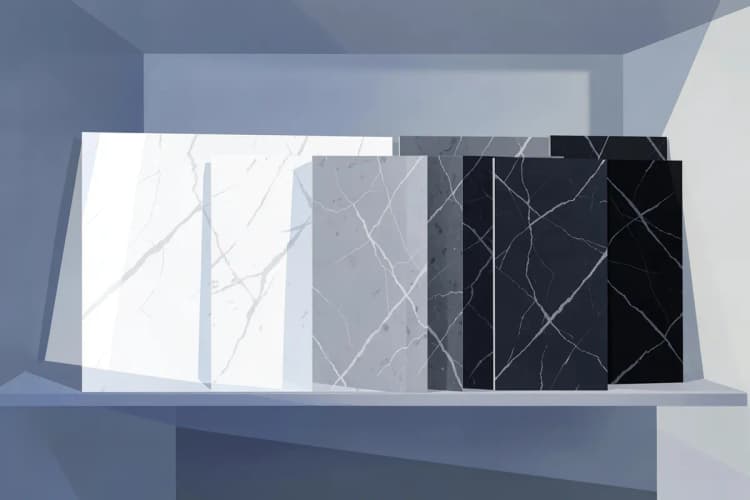
Choose the colour by testing physical samples beside your cabinet doors, floor, wall finish and appliances. The strongest choice is the one that still looks balanced in the actual kitchen, not simply the one that looks best in a showroom photograph.
Begin with the fixed elements. Cabinetry, flooring, windows and large appliances are harder to replace than a sample, so the worktop should respond to them. If the room already contains several finishes, a quieter quartz can provide visual order. If the cabinetry is restrained, a veined surface can become the feature that gives the room depth.
Undertones deserve close attention. Two surfaces that appear white online can lean warm, cool, grey or creamy in person. Hold samples vertically and horizontally, because reflections change with angle. View them near the window, beneath the planned task lighting and beside the splashback material. This simple exercise often rules out a colour that initially seemed ideal.
Scale changes perception. A small sample may make a pattern look delicate, while a full run can make the same pattern feel much more active. Ask how the design will be laid out across the longest visible run and island. With veined quartz, discuss whether the fabricator can position the slab so the movement supports the kitchen rather than stopping awkwardly at a seam.
Think about maintenance in visual terms as well as practical terms. Very pale and very deep surfaces can both show certain marks more readily, depending on the finish, light and household routine. That is not a reason to avoid either choice. It is a reason to select with open eyes and ask what cleaning routine the supplier recommends.
A useful way to organise the decision is to choose the mood first, then the pattern, then the finish and edge. For a calm, architectural kitchen, a restrained surface with a simple edge may be more successful than an elaborate pattern. For a social kitchen with a central island, stronger movement can make the island feel intentional. Sample-led decisions are more reliable than choosing from a catalogue alone.
When comparing quartz countertop options, start with technical clarity rather than the label alone. The useful questions are whether the supplier can identify the slab specification, explain the finish, provide care guidance and show a physical sample. A reputable product choice should be supported by information that helps the installer and homeowner understand how the surface is intended to perform.
Also inspect the pattern at a useful scale. A sample can show colour but not always the way movement travels across a long run. Ask the fabricator to discuss seam placement, edge treatment and the direction of any visible veining. That conversation is often more valuable than a general claim about popularity.
Compare each option through the same lens: appearance, fabrication suitability, care instructions and the quality of the specification. Look for a surface that fits the room rather than allowing a familiar name to decide the design. A strong option should work with the cabinetry and remain coherent around sink and hob cut-outs.
For a renovation, availability and clarity also matter. The supplier should be able to confirm which sample represents the proposed slab, what finish is being quoted and how changes will be handled before fabrication. This is where an independent conversation with an experienced fabricator can prevent assumptions from becoming expensive alterations.
Assess each option by its fit with the project brief. If the kitchen depends on subtle veining, examine full slab images or a large sample. If the priority is an even, quiet field, check the surface under both natural and artificial light. The best choice is not automatically the most visually dramatic option; it is the one that keeps the whole room in balance.
Across any comparison, ask for a written description of the selected colour and finish, a clear fabrication scope and practical care advice. Compare the material, the workmanship and the process together. A recognisable label cannot compensate for poor templating or a seam placed where it distracts from the design.
Explore our custom quartz and granite countertops for a stunning upgrade.
Get a Free Quote
Vinegar is acidic, so frequent or prolonged contact is not a sensible cleaning routine for quartz. A brief spill should be wiped away rather than left to sit, and everyday cleaning is better handled with a soft cloth and a mild product recommended for the surface.
The attraction of vinegar is understandable because it is familiar and often used around the home. The problem is that a kitchen worktop needs a repeatable care method, not an improvised treatment for every mark. Acidic liquids can be unsuitable for the finish, particularly when exposure is repeated or the liquid is allowed to dry on the surface.
If vinegar is spilled, remove it promptly with a damp cloth, then dry the area. Do not combine cleaning products, and do not scrub aggressively in an attempt to remove a ring. A soft cloth and patience are safer than a rough pad. For persistent marks, follow the quartz supplier's care instructions instead of escalating to a stronger household chemical.
The same principle applies to lemon juice, harsh descalers and abrasive powders. A worktop can be hygienic without being subjected to increasingly powerful products. Routine removal of crumbs, grease and liquid is usually more useful than occasional intensive cleaning.
Care advice should form part of the handover after installation. Keep the guidance with the kitchen records so everyone in the household uses the same approach. That is especially helpful when the chosen finish is matt, textured or unusually sensitive to visible residue.

A hot cup of coffee should not be treated as equivalent to a hot pan or recently boiled cookware. A warm mug is generally a routine kitchen situation, but using a coaster or heat resistant mat is the safer habit, particularly when the cup is very hot or left in one place for a long time.
Quartz is made for kitchen use, but resin within an engineered surface can be affected by concentrated heat. Thermal shock is also a concern when a very hot object meets a cooler surface. For that reason, place hot pans, roasting trays, baking dishes and appliances that release heat on a suitable trivet rather than directly on the worktop.
Coffee spills should be dealt with promptly, especially on a pale or textured finish. Blot first, then clean with a soft cloth and an appropriate mild product. Avoid sliding a hot mug across the surface, since heat, grit beneath the base and pressure can combine to create unnecessary stress or marks.
This is a small behavioural change with a large practical benefit. Keep trivets where drinks and cookware are normally placed, rather than storing them out of reach. A good kitchen design makes careful use easy.

Start with local stone fabricators and installation specialists that can show samples, explain their measuring process and provide a clear written quotation. Search by your area, then assess the service behind the result instead of choosing on distance or a photograph alone.
For homeowners searching for quartz worktops locally, proximity is useful but not decisive. The fitter still needs to understand the cabinet layout, access to the property, appliance positions, sink choice and the practical route from fabrication to installation. Ask who takes the template, who makes the slab and who completes the fitting. A joined-up process usually makes responsibility clearer.
Look at the supplier's own work, not only staged room images. Useful evidence includes close views of joins, internal corners, edge profiles, upstands and cut-outs. Ask how revisions are confirmed before fabrication and what information the quotation includes. A low headline figure can be difficult to compare if templating, cut-outs, edging or fitting are described vaguely.
Location also affects communication. A supplier serving London and nearby areas may be able to arrange an in-person assessment, provide samples and discuss the kitchen in its actual setting. That is valuable when walls are uneven, access is restricted or the layout contains an island with a demanding seam position.
Before deciding, send accurate measurements if available, but understand that a quotation based on homeowner measurements is still different from a final template. Cabinets, sink and hob details need to be confirmed before fabrication. The more complete the information, the easier it is to compare like with like.
MT Stones approaches the subject as a stone fabricator and installer, with its own London based factory and an emphasis on in-house cutting, shaping and finishing. From the homeowner's perspective, that means the conversation can stay focused on the actual slab, the kitchen details and the practical sequence from design through fitting.
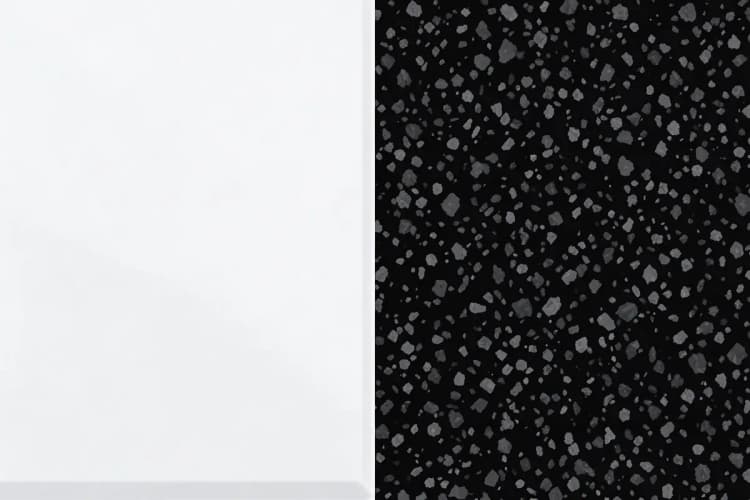
Good maintenance begins with prevention. Use a chopping board, place hot cookware on a trivet, lift rather than drag heavy objects and wipe spills before they dry. These habits protect the finish and reduce the temptation to use aggressive cleaning products later.
For ordinary cleaning, remove loose debris first, then use a soft cloth with warm water and a mild cleaner suitable for quartz. Rinse away residue and dry the surface if streaks are visible. Microfibre cloths can be useful for polished finishes, while a textured or matt surface may need a little more attention to remove residue from its surface profile.
Avoid abrasive scourers, strong solvents, oven cleaner and unapproved sealants. Quartz does not generally need the same sealing routine associated with some porous stones, but the exact care guidance should come from the supplier of the selected surface. Do not assume that a product suitable for one worktop category is suitable for another.
Pay attention to the edges and seams. A seam should not be used as a lever point, and standing on the worktop can place stress on areas around cut-outs. If a chip or crack appears, stop treating the area as normal and ask the installer for advice rather than attempting a concealed repair with a household adhesive.
Fabrication safety belongs in the maintenance conversation too. HSE explains that engineered stone can contain up to 95% crystalline silica and recommends powered air purifying respirators with an assigned protection factor of at least 20 when engineered stone is processed or cleaned. HSE also warns that dust on surfaces or work clothing can be a significant exposure source, so work areas should be cleaned regularly.
The CDC says quartz surfacing materials may contain up to 93% crystalline silica. It also reports that cutting, grinding and polishing can release silica dust associated with silicosis risk. This is why cutting, drilling or reshaping should be left to properly equipped professionals, rather than attempted during a later home alteration.
SafeWork NSW states that cutting, grinding, trimming, drilling, sanding and polishing engineered stone generates respirable dust containing crystalline silica. The CDC links prolonged inhalation of silica dust from engineered stone with silicosis and also identifies associations with lung cancer, chronic obstructive pulmonary disease, kidney disease, autoimmune disorders and cardiovascular impairment. The practical lesson for a homeowner is simple: do not create dust by modifying an installed slab yourself.
Regulatory duties can differ by jurisdiction. For example, California's Department of Industrial Relations states that employers must make medical examinations available when respirable crystalline silica exposure is at or above 25 μg/m3 as an eight hour time weighted average for 30 or more days per year. That is not a substitute for UK specific advice, but it illustrates why professional controls, respiratory protection and housekeeping matter throughout fabrication.

Choosing a worktop is often where a renovation moves from broad inspiration to decisions that affect the daily life of the room. The right material must suit the colour scheme, the layout, the household's habits and the level of support needed during fabrication and installation. That is where Bancadas de Quartzo e Granito fits naturally into the process.
MT Stones offers made to measure quartz and granite worktops, with products manufactured from high quality materials and a broad range of colours and patterns. The service is intended for homeowners who want the surface, fabrication and installation considered as one project rather than treating the slab as an isolated purchase.
For someone still resolving the design, the useful next step is to compare samples against the actual kitchen, discuss the position of seams and cut-outs, and develop a quotation around the finished layout. A free quotation can then reflect the chosen material and the work required, rather than a vague estimate based only on a photograph or rough idea.
That approach also keeps expectations practical. Colour selection, templating, fabrication and fitting each have their own decisions, and a transparent discussion at the start gives the homeowner a clearer basis for moving forward. The aim is not to choose the loudest surface. It is to choose a worktop that makes sense for the room and is properly prepared for everyday use.
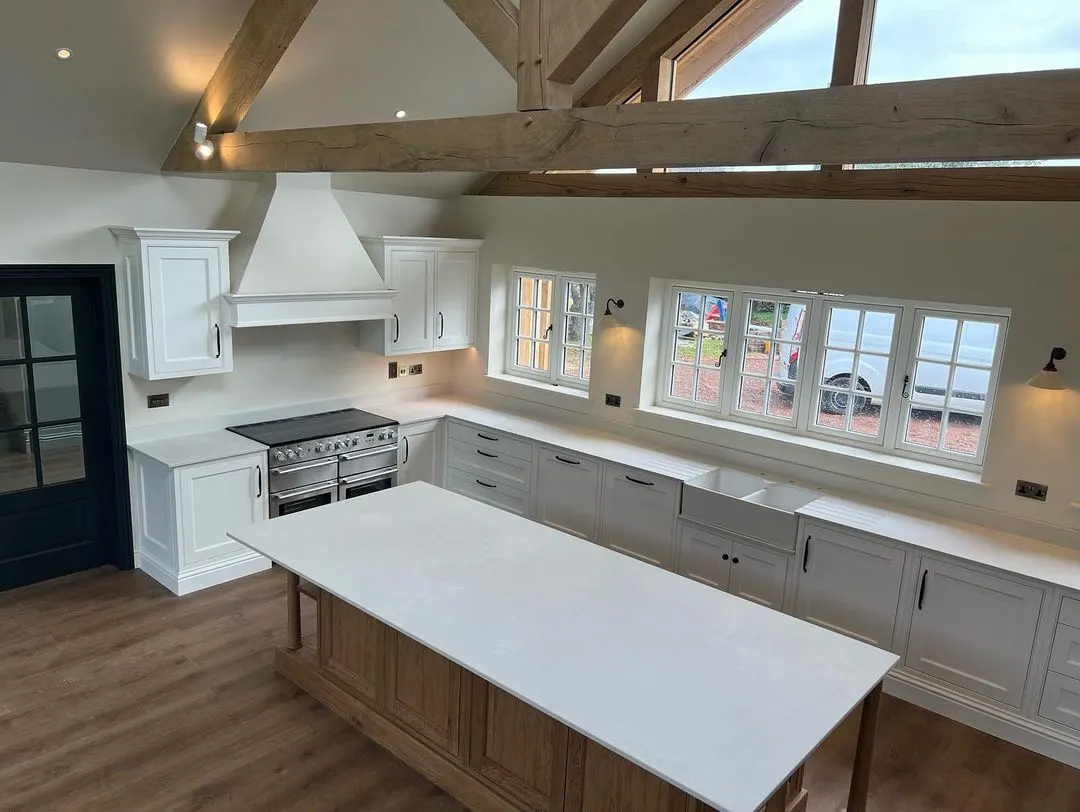
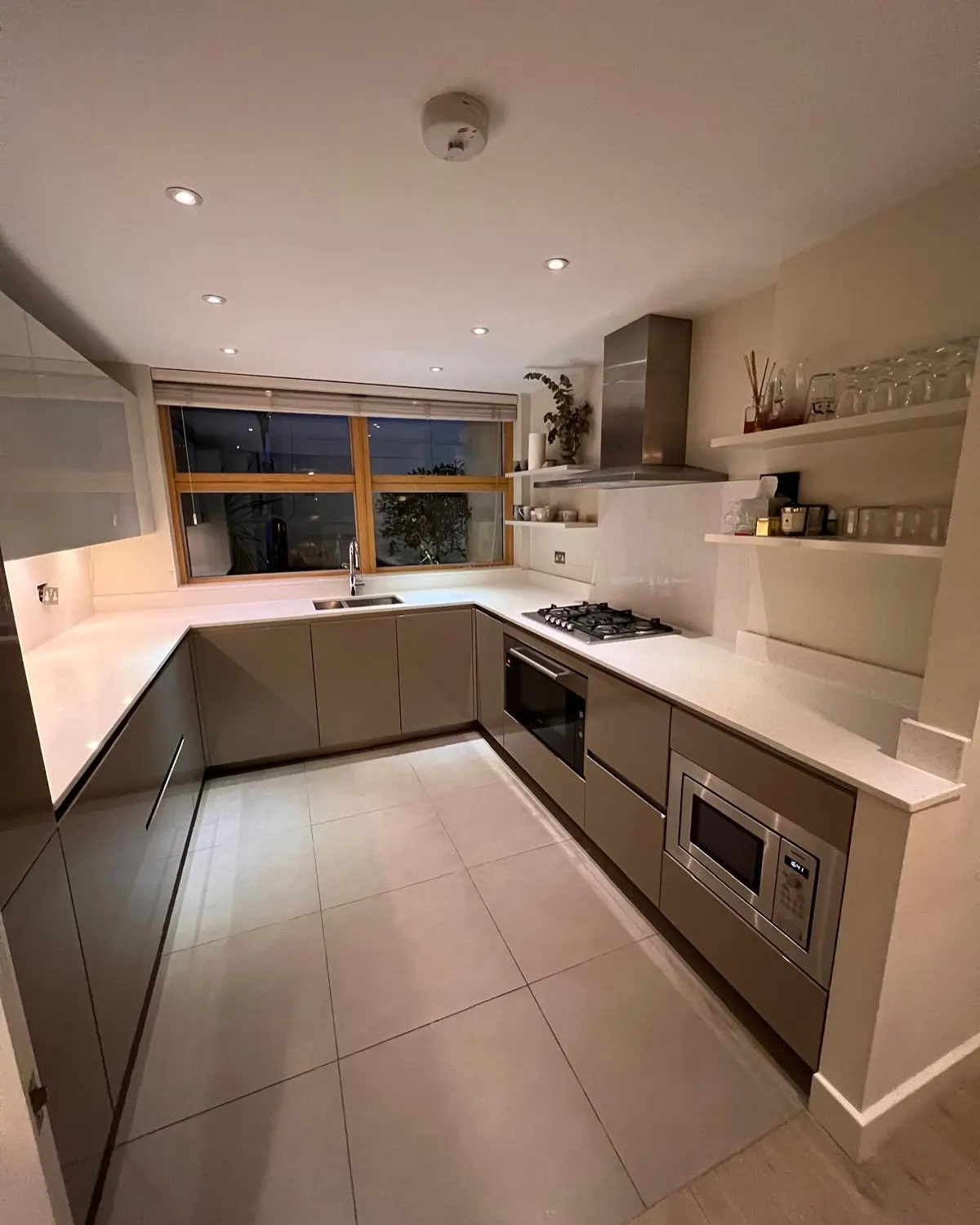
Explore our custom quartz and granite countertops for a stunning upgrade.
Get a Free Quote