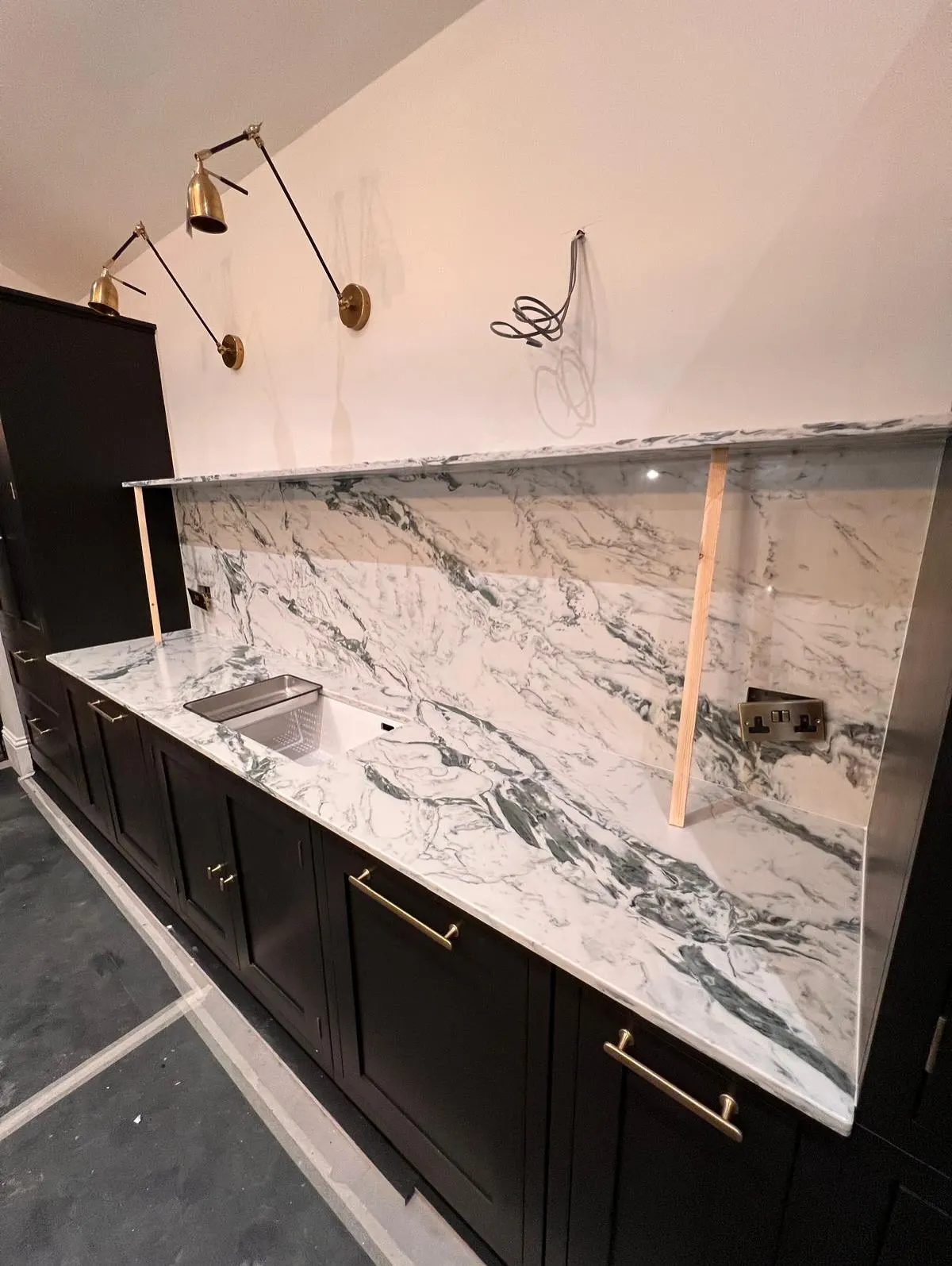
Quartz Countertops

Explore white quartz kitchen countertops, including benefits, drawbacks, finishes, care and selection advice for a confident kitchen renovation.

Ouvir o artigo
White quartz kitchen countertops can make a renovation feel brighter and more considered, but the right choice depends on colour, finish, care, and how your kitchen is used.
White quartz kitchen countertops are engineered surfaces made from quartz particles and resin, valued for their clean appearance, practical durability and broad design range. They suit modern, classic and transitional kitchens, especially when homeowners want a bright surface with less routine sealing than many natural stones. The trade-offs are important: direct contact with very hot cookware can damage the resin, and spills such as coffee, tomato sauce or red wine should be cleaned promptly. Choose samples in your own kitchen, assess the full slab when veining is involved, and match the finish to the amount of visual texture you want.
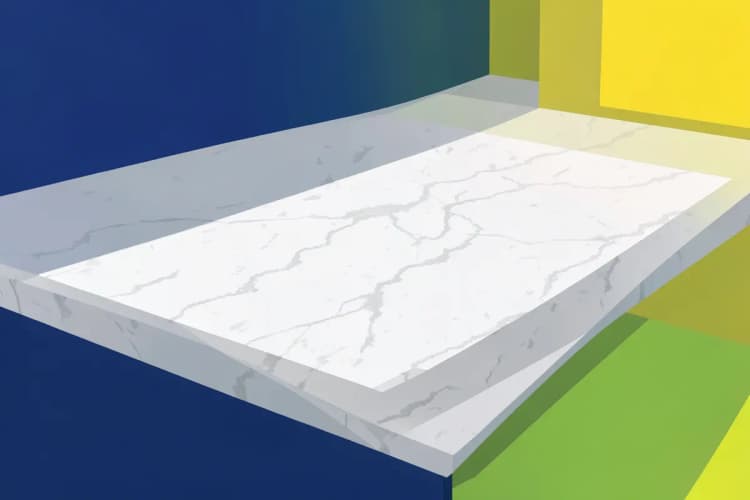
White quartz kitchen countertops are manufactured work surfaces made with quartz particles held in a resin binder, then formed, cut and finished for kitchen use. Their appeal comes from a controlled colour palette, predictable patterning and a surface that is generally simple to clean, while their main care requirement is avoiding direct heat and leaving staining spills unattended.
Although the word white suggests a single look, white quartz kitchen countertops range from crisp, cool tones to warmer ivory shades. Some are almost uniform, while others include fine movement, cloudy texture or veining designed to echo the appearance of natural stone. That choice affects how the surface sits beside painted cabinetry, tiled walls and metal hardware.
Engineered quartz is also a useful distinction when comparing quartz kitchen countertops. The material is manufactured rather than quarried as one solid natural slab, so a homeowner can often find more consistent colour and pattern from one area of a project to another. The final result still depends on slab layout, edge treatment, joins and installation accuracy.
For a renovation in the UK, the worktop should be considered alongside the practical details of the room. Sink and hob positions, window lines, splashbacks, breakfast bars and island proportions all influence which pattern will look balanced. A plain surface may calm a busy kitchen, while restrained movement can add character to a simple scheme.
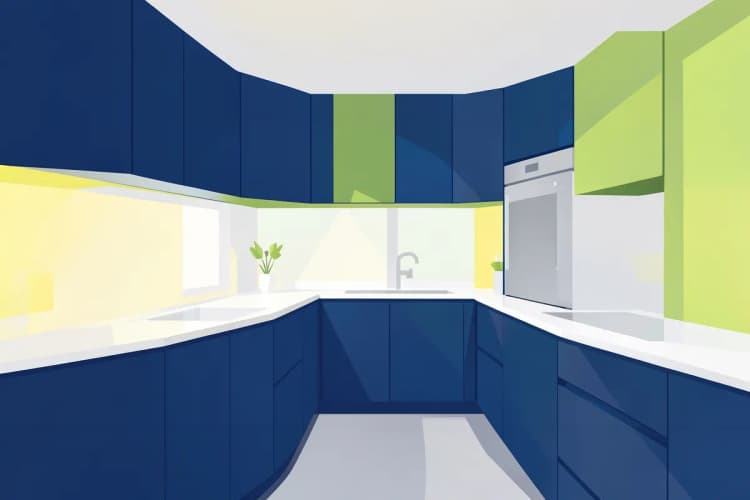
The strongest benefits are a bright appearance, broad design flexibility, straightforward daily cleaning and a hardwearing surface suited to normal kitchen activity. White quartz can also provide a more controlled visual result than a highly varied natural slab, which helps when coordinating several finishes in one renovation.
Light is the first reason many homeowners consider white quartz. A pale worktop reflects available daylight and helps a compact kitchen feel more open. In a larger room, it can connect the island, perimeter runs and splashback into one calm composition. The effect is not limited to contemporary kitchens. A softly veined white surface can sit comfortably with framed cabinetry, while a cleaner pattern suits a sharper, handleless design.
Design choice is broader than the label suggests. White quartz countertops colours include cool whites with grey movement, warmer creamy whites, pale stone-like backgrounds and surfaces with delicate linear veins. That makes it possible to coordinate with painted units without forcing every element to be the same shade. A slightly warmer surface can soften a stark scheme, whereas a cooler one can reinforce a crisp palette.
Consistency is another practical advantage. Because engineered quartz is produced to a designed appearance, homeowners can usually assess the intended character before fabrication. This is helpful where the kitchen includes a long run, a waterfall edge or a prominent island. Pattern direction and join placement still need professional planning, but the material gives the design team a clearer starting point.
The wider market context remains relevant in twenty twenty-six. Stonify’s twenty twenty-six countertop trends summary says engineered quartz remains the most chosen material, although its share is falling as quartzite and low-silica engineered surfaces gain ground. That does not make quartz the right answer for every room, but it shows why homeowners are comparing familiar quartz kitchen countertops with newer surface categories rather than treating the decision as automatic.
White remains popular, though it is not the only direction in current renovations. Stonify reports that white countertops account for thirty-seven percent of homeowner choices, down four percentage points. The figure supports a useful design observation: white is established, but a homeowner can still create individuality through tone, pattern, edge profile, splashback and cabinetry rather than relying on colour alone.
Daily care is uncomplicated when it is consistent. The Spruce recommends a damp, warm cloth or microfibre towel with mild soap for routine cleaning, with the soap kept between pH five and eight. Another care guide recommends warm water with a few drops of mild washing-up liquid on a soft cloth or non-scratch sponge. These habits suit busy households because they do not require a complicated maintenance ritual.
The surface also works well as a design anchor. If the cabinetry has a strong colour or the room includes patterned tiles, a restrained white background can stop the scheme becoming visually crowded. Conversely, if the units and walls are all pale, a soft vein or subtle aggregate can provide enough variation to make the kitchen feel layered rather than unfinished.
Explore our custom quartz and granite countertops for a stunning upgrade.
Get a Free Quote
The main disadvantages are heat sensitivity, possible staining from neglected spills, and the need to choose the pattern and finish carefully. White surfaces can also make crumbs, marks and poor colour matching more visible, so design selection and everyday habits both matter.
Quartz is not a surface for placing hot cookware directly on. The Spruce commonly states a heat tolerance of about one hundred and fifty degrees Fahrenheit, or sixty-five degrees Celsius, for white quartz countertops. A separate quartz care guide explains that resin binders can begin to soften around the same temperature, and direct contact with hot cookware may cause permanent damage. Use a trivet or heat pad as part of normal kitchen practice.
White also makes certain spills easier to notice. The Spruce notes that red wine, tomato sauce and coffee can stain when they react with the resin content, particularly if they are allowed to remain on the surface. Prompt cleaning is therefore more than a cosmetic preference. It reduces the chance that a small cooking accident becomes a lasting mark.
Visual uniformity can be a disadvantage when the wrong slab is selected. A bright, completely flat white may look washed out beside equally pale cabinetry, while heavy veining can dominate a small room. Seams, cut-outs and edge details also deserve attention because a simple surface leaves less pattern to distract from inaccurate layout or rushed finishing.
The colour may show everyday traces more readily than a darker or busier worktop. That is not a structural failure, but it means homeowners who want a permanently low-visibility surface should consider gentle movement rather than a totally blank background. The best choice balances the room’s light, the household’s habits and the amount of visual maintenance the owner is comfortable with.

Choose the right surface by assessing the room’s style first, then checking practical performance and finally comparing colour and finish samples in the actual kitchen. The most convincing result comes from treating the slab, cabinetry, lighting, edge and layout as one design decision.
Begin with the atmosphere you want rather than a shade name. A crisp, low-movement white can support a minimal kitchen with flat-front cabinetry and restrained hardware. A warmer white with quiet veining can make a classic or transitional room feel welcoming without losing the brightness that drew you to quartz in the first place.
Scale matters. A pattern that appears delicate on a small showroom sample may become much stronger across an island. House Beautiful recommends inspecting a white quartz design with veining at full slab scale or in an installed sample kitchen, rather than judging it only from a small piece. This is especially important when the island is the visual centre of the room or when a vein needs to flow across a visible join.
Think about the elements that will remain in the room. Cabinets, flooring, wall colour, splashback, taps and handles can each pull a white surface warmer, cooler, softer or sharper. White quartz kitchen countertops should connect these choices, not compete with them. A sample that looks balanced in a showroom can read very differently beside your own flooring and under your own ceiling lights.
MT Stones approaches this stage as a design conversation rather than a colour-only selection. The company supplies quartz, granite, marble and porcelain worktops, with more than four hundred colours and patterns available. That breadth makes it sensible to narrow the brief by mood, pattern strength and room conditions before focusing on a particular slab.
Ask how the kitchen will actually be used. A household that cooks frequently, entertains often or has children nearby needs a surface that fits practical routines, not just photographs. Quartz can be convenient for everyday preparation, but it still requires sensible protection from heat, sharp impact and harsh cleaning habits.
The essential care routine is simple: wipe ordinary marks with warm water and mild soap, use a soft cloth or non-scratch sponge, and remove staining liquids promptly. Do not treat the worktop as a place to rest a hot roasting tray directly. Small habits protect the finish and make the pale surface easier to live with.
During planning, discuss cut-outs, sink reveals, hob positions, overhangs and joins before fabrication. These details affect both appearance and stress around vulnerable areas. A professional template should reflect the fitted cabinets and the appliances that will be installed, so the finished worktop belongs to the kitchen rather than appearing adapted to it afterwards.
Maintenance is also a supplier question. Ask how samples are identified, how the slab will be oriented, how joins will be positioned and who handles templating and fitting. Clear answers are more useful than a generic claim that a surface is durable, because the quality of the finished installation depends on decisions made before the slab is cut.
Take home samples and compare them with cabinets, flooring, paint and hardware throughout the day. House Beautiful specifically recommends this approach because the same white can look cooler in daylight and warmer under artificial lighting. Place samples near the island and perimeter run rather than viewing them only against a neutral display board.
Finish changes the mood as much as colour. House Beautiful describes polished as the typical factory standard, while honed and leathered finishes create a more matte appearance. Polished quartz can heighten brightness and show veining clearly. Honed quartz feels quieter and more contemporary, while a leathered texture introduces tactile depth and can reduce the visual flatness of an all-pale scheme.
Texture can be a decisive detail in a white room. A slight haze, soft vein or subtle aggregate helps avoid a flat or washed-out appearance without turning the worktop into the dominant feature. The right level of movement depends on the cabinet profile and the rest of the finishes. If the splashback is patterned, keep the worktop calmer. If the walls are plain, a restrained vein may supply the needed focus.
Finally, review the full fabrication plan. Confirm the visible face of the island, the direction of any veining, edge profile, upstands, splashbacks and the position of joins. A beautiful slab can lose impact when its strongest feature is cut away or placed where it is rarely seen. Good selection is therefore both visual and technical: choose the surface, then plan how the room will reveal it.

Once the design has been narrowed to the right white tone, pattern strength and finish, the remaining challenge is turning that decision into an accurately fitted worktop. This is where Bancadas de Quartzo e Granito can help, because MT Stones provides made-to-measure quartz and granite worktops for renovation projects rather than treating the slab as a one-size-fits-all purchase.
The company operates from London and manufactures in its own London-based factory, where its stonemasons cut, shape and finish slabs to the project requirements. That approach brings the design discussion and fabrication process closer together. It is particularly relevant when the kitchen includes an island, curved sections, detailed cut-outs or a layout where join placement needs careful thought.
The service covers a broad selection of high-quality quartz and granite options, with more than four hundred colours and patterns available, plus professional installation. The offer description states installation in up to seven days, alongside competitive pricing and free quotations. For a homeowner who has already compared samples and resolved the practical details, that gives the next stage a clear shape: confirm the measurements, settle the chosen material and let the fabrication plan follow the finished kitchen layout.
MT Stones’ process begins with consultation and design, including discussion of requirements, costs and stone selection. Measurements can be supplied for a quotation, or the team can visit the home to take exact measurements. Once the cabinets are fitted and the relevant sinks and appliances are available, templating can finalise the details before fabrication. The result is a more joined-up route from an attractive white quartz idea to a worktop that is prepared for the room it will actually occupy.
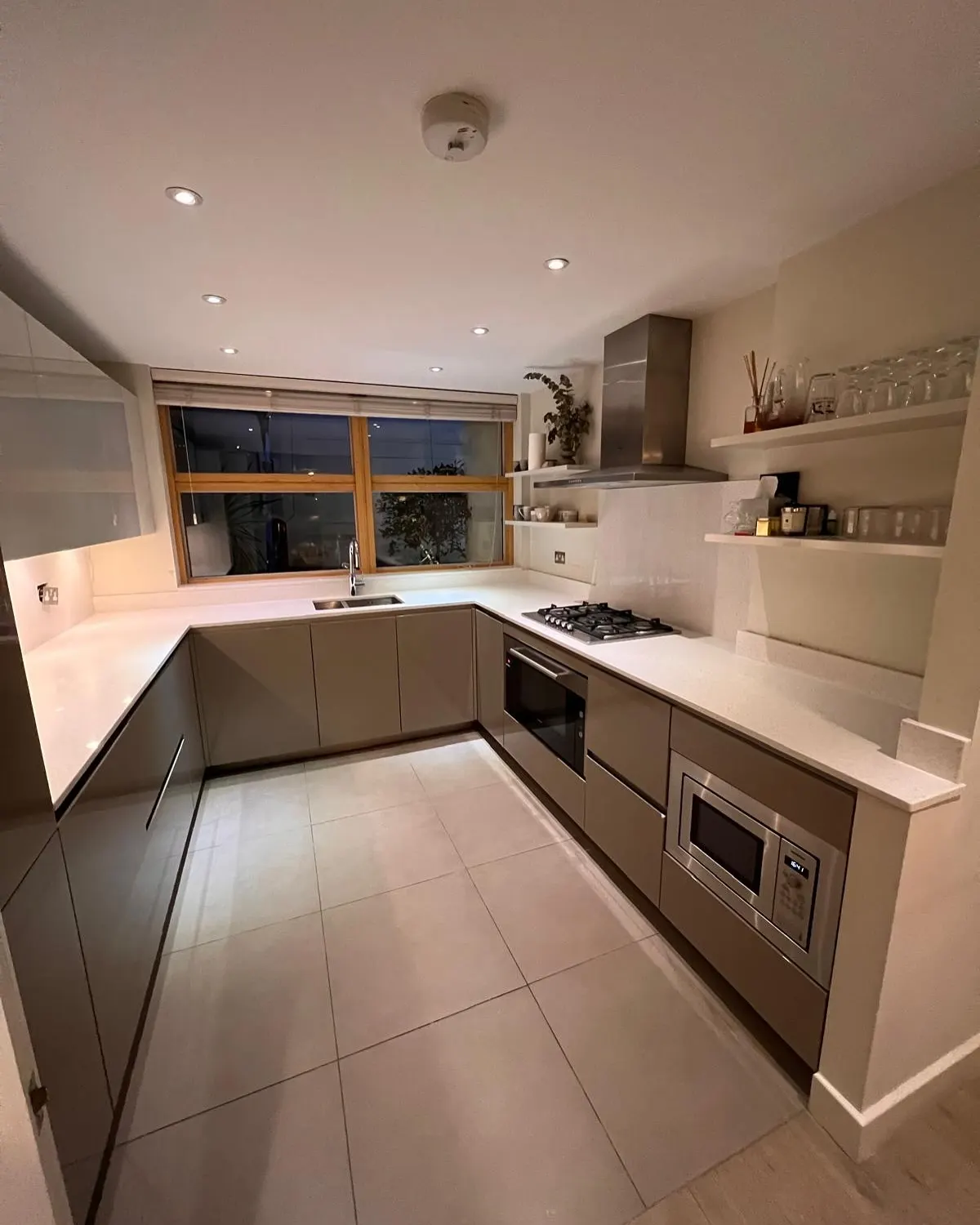
Explore our custom quartz and granite countertops for a stunning upgrade.
Get a Free Quote