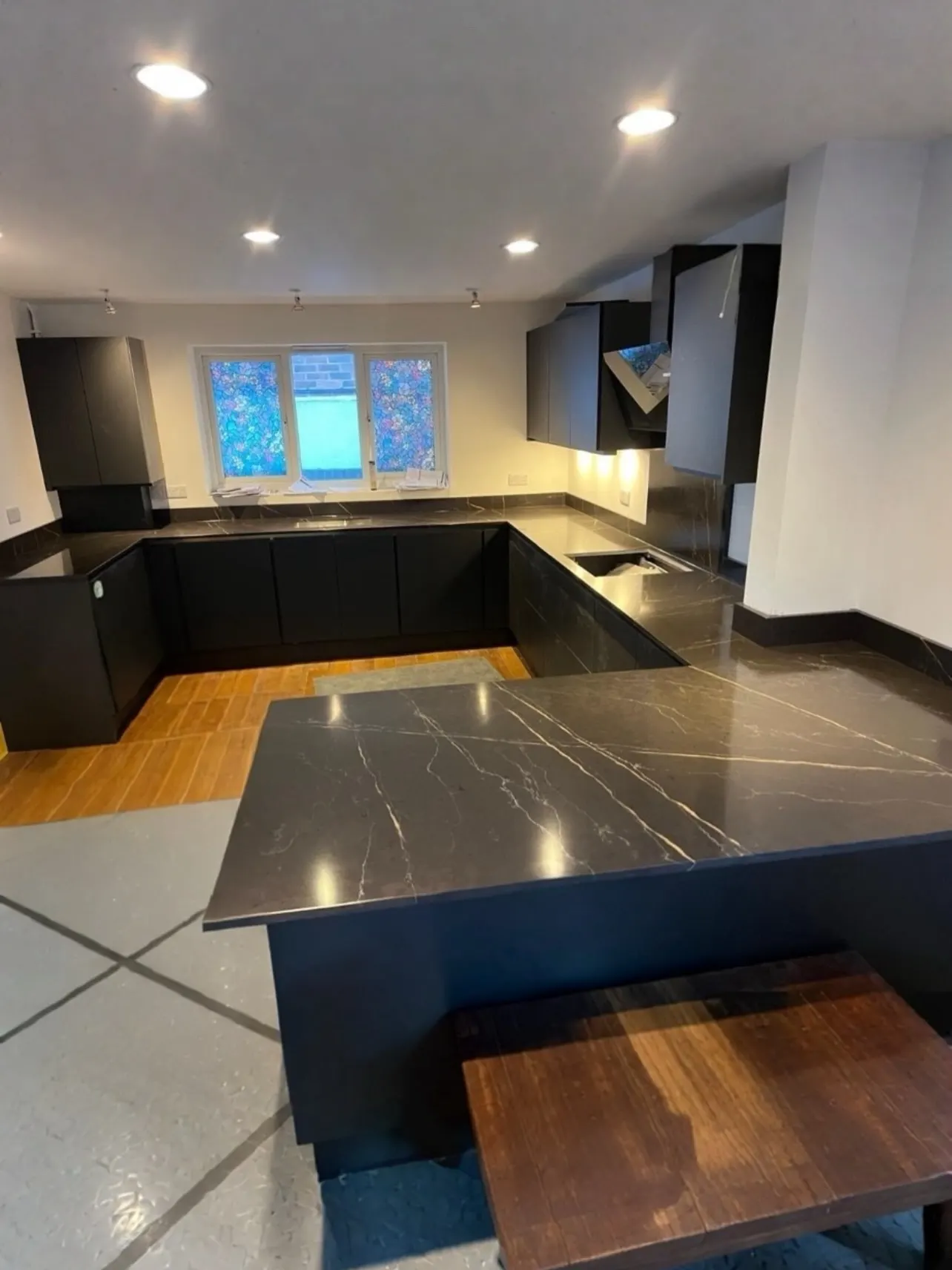
Kitchen Design

Explore cheap worktops for a UK kitchen, compare laminate and vinyl, and see when quartz or granite may offer better long term value.

Ouvir o artigo
Cheap worktops can protect a renovation budget, but the lowest purchase price is not always the lowest overall cost. This guide explains where savings make sense and when stone deserves a closer look.
Cheap worktops are usually made from laminate or a surface covering, with laminate offering the most established budget route for many UK kitchens. The right choice depends on more than the sheet price: check thickness, edging, cut outs, joins, delivery, fitting, moisture exposure and expected use. Vinyl can refresh a sound existing surface, while quartz and granite require a larger initial budget but bring a more substantial finish and made to measure fabrication. For a renovation that needs a durable focal point, compare the complete installed cost rather than choosing by material price alone.

Cheap worktops are lower cost kitchen surfaces chosen to control the renovation budget without leaving the cabinets unfinished. They commonly include laminate and surface coverings, although the real cost also includes edging, cut outs, joining, delivery and fitting.
A cheap worktop is not simply a worktop with a low shelf price. It is a surface selected with close attention to the whole project, including how it will be transported, cut, edged, joined and installed. A material that appears inexpensive can become less economical if it needs specialist handling, creates difficult joins or has to be replaced after moisture reaches the substrate.
For most homeowners, the phrase describes a practical answer to a familiar renovation problem. The kitchen needs to be usable, the cabinets may already be in place, and the available budget has to cover appliances, plumbing, flooring, lighting and decoration as well as the work surface. A sensible budget worktop therefore needs to look acceptable, suit the way the kitchen is used and survive ordinary cleaning and preparation.
The important distinction is between low initial cost and good value. A low cost surface may be a sound decision for a rental property, a temporary kitchen, a quick refresh or a room that receives light use. It may be less convincing in a busy family kitchen where hot pans, repeated wiping, standing water and heavy preparation are part of daily life. The best choice depends on the demands placed on the surface.
The layout also matters. A simple run with straightforward edges is easier to budget than a kitchen with several corners, an island, a sink cut out, a hob cut out and awkward access. Even an affordable material needs accurate measurements. Small errors can create visible gaps, unusable sections or extra work on installation day.
MT Stones approaches the subject from the practical side of fabrication. A budget decision should begin with the kitchen layout and the homeowner’s priorities, then compare materials on a complete installed basis. That approach avoids treating the cheapest material as automatically suitable and leaves room for a more durable surface where the kitchen deserves it.
Before selecting a finish, consider how the surface will meet walls, appliances and sinks. Edge treatment, upstands, splashback details and the position of joins can change the appearance considerably. A modest material can look considered when these details are planned, while an expensive material can look poorly resolved when the layout has not been thought through.
Explore our custom quartz and granite countertops for a stunning upgrade.
Get a Free Quote
For most UK renovation budgets, laminate is usually the cheapest established worktop type. Vinyl can cost less as a refresh because it covers an existing surface, but it is only suitable when that surface is flat, stable and in good condition.
are the usual starting point for a cost conscious kitchen because they combine a manufactured core with a decorative, easy to specify surface. They are available in many colours and patterns, so a homeowner can create a clean, coordinated room without paying for a solid slab. Their familiar construction also means that many kitchen installers understand how to cut and fit them.
The value of laminate is strongest when the kitchen has a relatively simple layout and the owner wants a practical finish rather than a premium stone feel. A plain colour can keep a small room visually calm, while a patterned surface can disguise everyday marks more effectively than a very uniform finish. The appearance should still be judged beside cabinet doors, wall finishes, flooring and appliances, because a sample viewed alone can look different in the completed room.
The core limitation is its vulnerability at exposed cut edges and around areas where water can sit. Sink zones, dishwasher edges and joints deserve careful planning. Sealing, supporting and fitting the surface correctly are not optional details. If water reaches the internal material, swelling can spoil an otherwise serviceable installation. Good habits also matter: wipe standing water, use a board for cutting and protect the surface from direct heat rather than relying on the worktop to absorb it.
Laminate is particularly useful when the budget needs to stretch across a larger area. It can make an entire kitchen feel complete without making the worktop the dominant expense. That is often the right choice for a straightforward refurbishment where the owner wants dependable function and a controlled visual finish. It is less suitable when the brief calls for deep fabrication, complex curves, integrated detailing or the substantial appearance associated with natural or engineered stone.
The quote should identify what is included. Ask whether finished edges, end panels, upstands, sink and hob cut outs, joins, sealing and fitting are included or priced separately. A material can be called cheap while the completed quotation rises through additions that were not obvious at the beginning. This is why comparing like for like is more useful than comparing a headline price.
Laminate also deserves a realistic conversation about future changes. If the room may be altered soon, a practical surface can avoid overinvesting in a short term layout. If the kitchen is intended to remain in place for many years, the decision should consider daily wear and the possibility that replacing the worktop later will disrupt splashbacks, appliances and decorating. The cheapest route today is not always the least disruptive route overall.
Vinyl worktop coverings are a different proposition from buying a new manufactured worktop. They are used to refresh an existing surface with a new appearance, which can be attractive when the cabinets are sound and the renovation is mainly cosmetic. The result depends heavily on the condition of what lies underneath.
Self adhesive vinyl wraps can be applied to laminate surfaces when those surfaces are flat, as Frenchic’s DIY guidance explains. That makes preparation central to the project. The existing worktop should be clean, dry, stable and free from raised edges, deep damage or movement. A covering cannot reliably correct a swollen core or disguise a surface that flexes under pressure.
The appeal is visual flexibility. A tired colour can be changed without removing the whole worktop, and a covering may help coordinate an inherited kitchen with new cabinet fronts or decoration. It can be useful for a temporary update, a property being prepared for sale or a room where a full replacement is not yet justified. The homeowner should, however, think of it as a finish applied over a base, not as a new structural worktop.
Edges and high contact areas need particular care. The front edge, corners, sink surround and areas near a hob experience more handling and heat than a quiet section of the run. If the wrap is poorly aligned, stretched excessively or exposed to moisture at an unprotected edge, the visual improvement may not last as expected. Neat preparation and patient application are more important than the apparent simplicity of the product.
Vinyl is therefore cheapest in the right situation, not in every situation. If the existing worktop is flat and serviceable, covering it may avoid removal and disposal. If it is damaged, damp, uneven or poorly supported, investing in a new surface is usually the more rational starting point. The condition of the base should be assessed before the covering is ordered.
For homeowners considering a vinyl finish, the most useful question is not whether it looks attractive in a photograph. It is whether the existing worktop provides a sound foundation and whether the kitchen’s use matches the level of protection the covering can provide. That honest assessment prevents a low cost refresh from becoming a short lived detour before replacement.
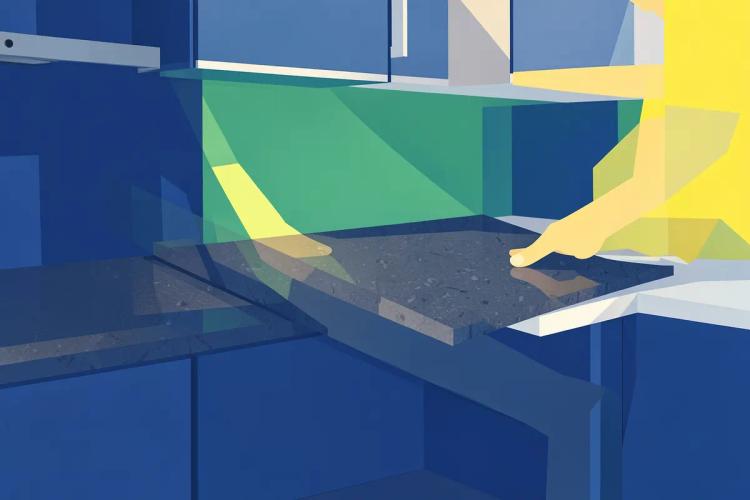
A low cost laminate or a vinyl refresh can be entirely sensible, yet some renovations reach a point where the worktop needs to do more than complete the room. If the kitchen is the visual centre of the home, if the layout includes a prominent island, or if the surface will be used heavily every day, quartz and granite deserve a considered comparison rather than being dismissed as automatically out of reach.
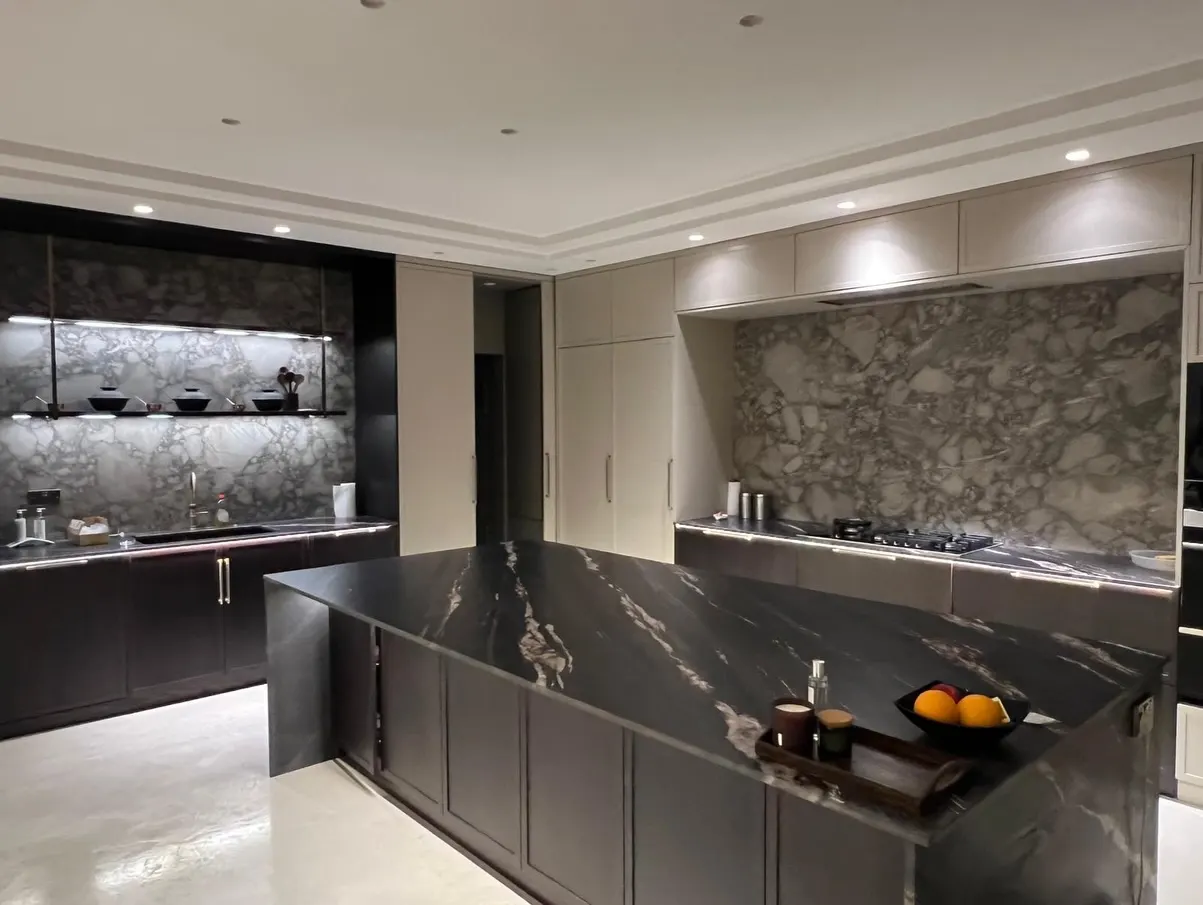
Quartz and granite change the conversation because they are selected as substantial surfaces and fabricated to the kitchen rather than treated as a thin decorative finish. Their appearance can give the room a stronger focal point, while the material choice supports a more tailored result around sinks, hobs, corners and other fixed features. The value is not only in the slab itself. It also lies in the accuracy of the template, the quality of the fabrication and the way the completed surface fits the room.
Quartz offers a broad design range, from calm neutral effects to more expressive patterns. Granite brings the variation and character of natural stone, so each selection has its own visual movement. Neither should be chosen from a small image alone. Samples and full slab viewing can help the homeowner understand colour, veining, texture and how the finish will work beside the cabinets and lighting.
The higher initial spend can be easier to justify when the worktop is expected to remain through the life of the kitchen. A surface that looks and feels substantial may reduce the temptation to remodel again simply because the original budget finish no longer suits the room. That does not make quartz or granite the right answer for every project. It means the decision should include design importance, expected use, replacement disruption and the value placed on a made to measure finish.
Fabrication is especially important in a renovation. Cabinets need to be fitted and the final positions of sinks, hobs and other relevant elements need to be known before templating. Accurate information helps the fabricator plan cut outs, joins, overhangs and edges around the actual room rather than relying on assumptions. This is where a specialist stone supplier can add value that is not visible in a raw material comparison.
MT Stones provides made to measure quartz and granite worktops, with fabrication handled through its London based factory and a process that includes consultation, templating, fabrication and fitting. The company works with a wide range of colours and patterns, allowing homeowners to consider a stone surface without reducing the decision to a single appearance. Its stated service is available in London and surrounding areas, which is relevant when planning an in person renovation.
The practical next step is to compare a complete stone quotation with the complete cost of the budget alternatives. Include the worktop area, edge details, cut outs, joins, templating and installation in the comparison. Then ask what each option is likely to feel like in daily use. A budget surface may remain the best answer for a light refresh, while quartz or granite may be the more coherent choice for a long term kitchen where the worktop is central to the design.
A stone worktop also benefits from early planning. Cabinets should be ready for templating, and the sink, hob and range cooker should be available or positioned as required for the final measurements. This reduces uncertainty and helps the finished fabrication follow the actual installation rather than a provisional drawing. It also gives the homeowner an opportunity to resolve awkward corners, support requirements and visual joins before production begins.
There is no virtue in spending more simply to spend more. The useful question is whether the material matches the kitchen’s role. A modest rental refresh, a short term update or a lightly used utility area may call for a restrained budget choice. A permanent family kitchen with a visible island and a carefully planned layout may benefit from the presence and tailored fit of stone. Thinking in those terms makes the decision more rational and less driven by a material label.
For homeowners who have reached this point, Bancadas de Quartzo e Granito from MT Stones provides a made to measure quartz and granite option with professional installation and a broad selection of available colours and patterns. The company describes the service as offering competitive prices and quick installation, including installation within its stated short turnaround. The relevant question is whether that type of tailored surface solves the limitations identified in the earlier budget comparison.
A free quote can help establish that answer without committing the whole project to a material before the layout and requirements are understood. Measurements, stone selection, edge preferences and the positions of sinks and hobs all contribute to a realistic assessment. The aim is not to turn every budget kitchen into a premium scheme. It is to give the homeowner enough information to choose the surface that fits the room, the renovation plan and the way the kitchen will actually be used.
Explore our custom quartz and granite countertops for a stunning upgrade.
Get a Free Quote